British Expansion and Consolidation in India: Anglo-Mysore, Anglo-Maratha, and Anglo-Sikh Wars, Subsidiary Alliance, and Doctrine of Lapse (1767 – 1856 CE)
Employing a dual strategy of direct military conquest (against formidable native powers like Mysore, the Maratha Confederacy, and the Sikh Empire) and diplomatic annexation (through mechanisms like Lord Wellesley’s Subsidiary Alliance and Lord Dalhousie’s Doctrine of Lapse), the British dismantled regional autonomy and unified India under colonial administrative control.
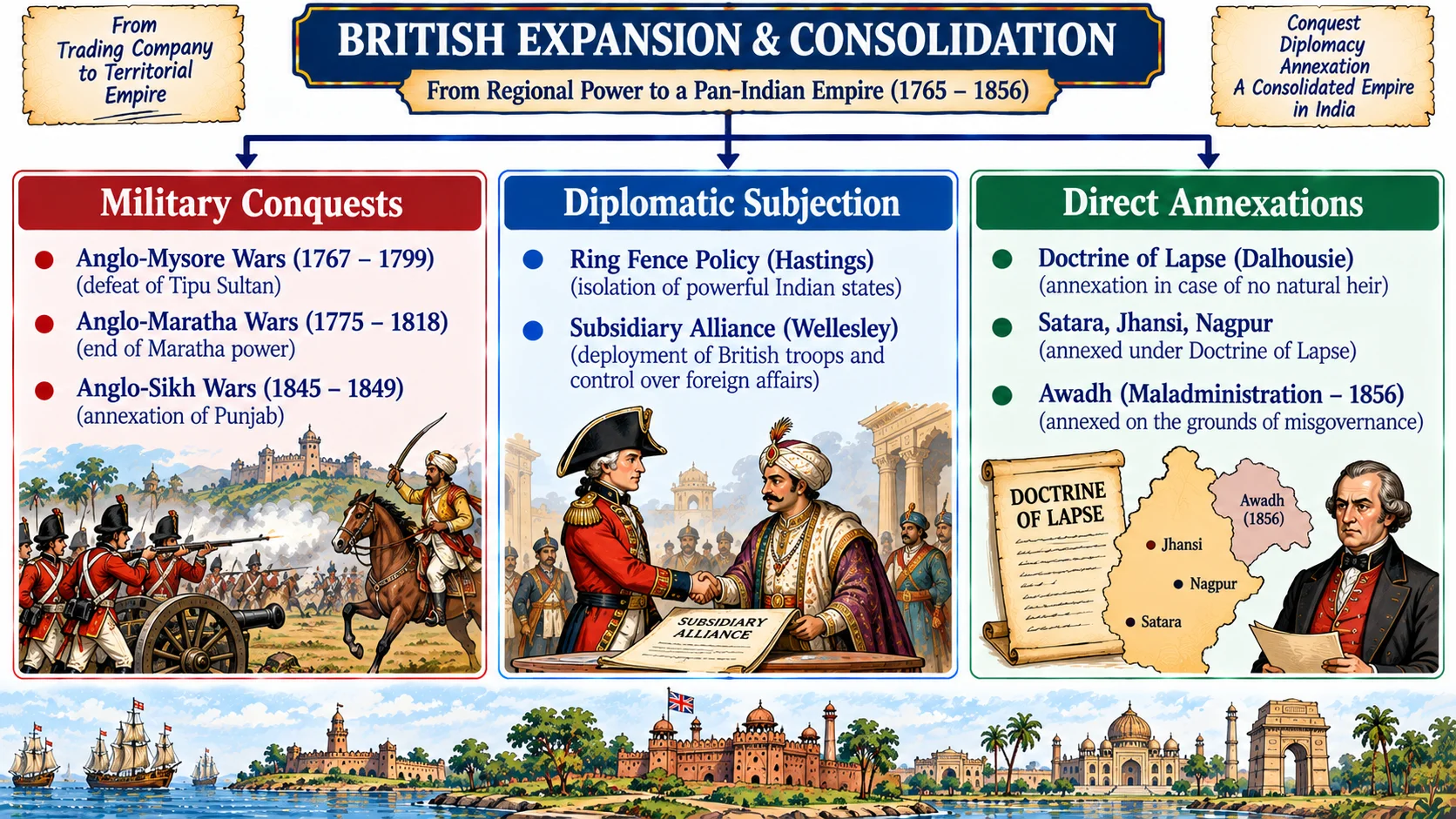 Figure 1: Evolution of the British Empire from a Mercantile Corporation to Pan-Indian Sovereignty (1765 – 1856 CE)
1. The Anglo-Mysore Wars (1767 – 1799 CE)
Under the leadership of Hyder Ali and his son Tipu Sultan (“The Tiger of Mysore”), the Kingdom of Mysore emerged as the most formidable challenge to British expansion in South India. Mysore modernized its military using French technical assistance, established state-run arsenals, and promoted international trade.
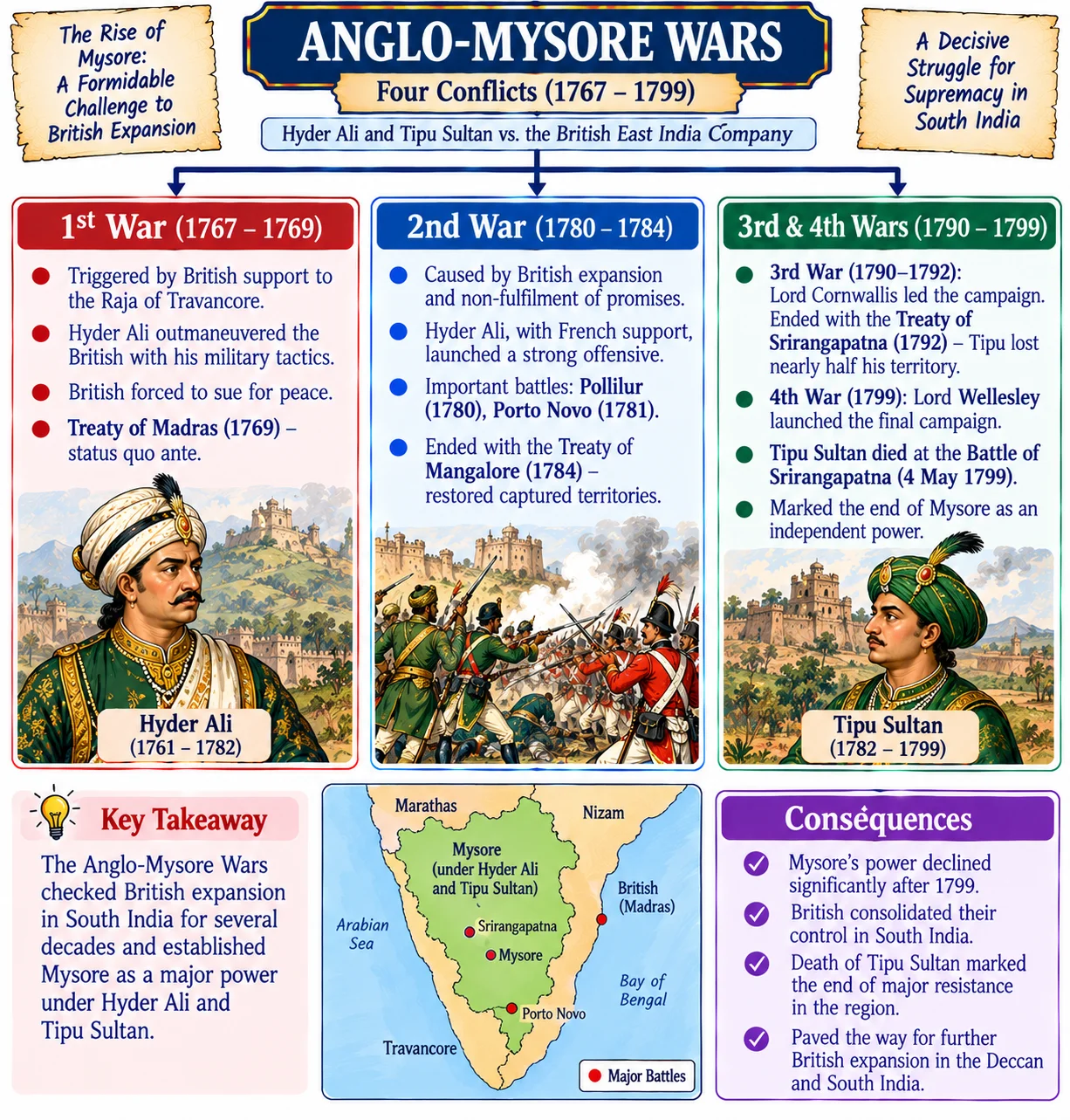 Figure 2: Chronological Summary and Outcomes of the Four Anglo-Mysore Wars (1767 – 1799 CE)
A. First Anglo-Mysore War (1767 – 1769 CE)
- Cause: The British formed a triple coalition with the Nizam of Hyderabad and the Marathas against Mysore.
- Course: Hyder Ali skillfully broke the alliance through diplomacy, turned the Marathas and the Nizam to his side, and swept across the Carnatic, threatening Madras.
- Outcome — Treaty of Madras (1769 CE): A defensive pact for the British. Both parties restored conquered territories, and the British promised mutual military assistance if Mysore was attacked by another power.
B. Second Anglo-Mysore War (1780 – 1784 CE)
- Cause: When the Marathas attacked Mysore in 1771 CE, the British violated the Treaty of Madras by refusing aid. Later, the British captured the French-controlled port of Mahe within Hyder Ali’s jurisdiction.
- Course: Hyder Ali allied with the Nizam and Marathas, routing British forces under Colonel Baillie. British General Sir Eyre Coote defeated Hyder Ali at the Battle of Porto Novo (1781 CE). Hyder Ali died of cancer in 1782 CE, and his son Tipu Sultan continued the war.
- Outcome — Treaty of Mangalore (1784 CE): Signed by Tipu Sultan and Lord Macartney on the basis of mutual restitution of conquests and prisoners of war.
C. Third Anglo-Mysore War (1790 – 1792 CE)
- Cause: Tipu Sultan attacked Travancore, a British ally. Governor-General Lord Cornwallis formed an alliance with the Nizam and the Marathas.
- Course: Cornwallis personally commanded British troops, marched on Srirangapatna, and besieged Tipu’s island fortress.
- Outcome — Treaty of Srirangapatna (1792 CE):
- Tipu was forced to surrender nearly half of his kingdom to the British and their allies (Baramahal, Dindigul, and Malabar ceded to the Company).
- A heavy war indemnity of ₹3 crore was imposed, and Tipu was forced to surrender two of his young sons as hostages until the indemnity was paid.
D. Fourth Anglo-Mysore War (1799 CE)
- Cause: Governor-General Lord Wellesley demanded that Tipu enter into the Subsidiary Alliance. Tipu rejected the proposal, maintaining diplomatic contact with Revolutionary France, the Ottoman Empire, and Mauritius, and joining the French Jacobin Club.
- The Climax: British forces led by General Stuart and General Harris, supported by Arthur Wellesley, stormed the island fortress of Srirangapatna.
- Outcome: Tipu Sultan died fighting heroically at the water-gate of Srirangapatna on May 4, 1799 CE. Mysore was partitioned; the core territory was restored to the ancient Hindu Wodeyar dynasty under young prince Krishnaraja III, who was coerced into signing the Subsidiary Alliance.
2. The Anglo-Maratha Wars (1775 – 1818 CE)
Following their recovery from the Third Battle of Panipat, the Maratha Confederacy remained the premier native power in India. However, bitter internal succession rivalries among the provincial sardars (Peshwa, Scindia, Holkar, Bhonsle, and Gaekwad) invited British intervention.
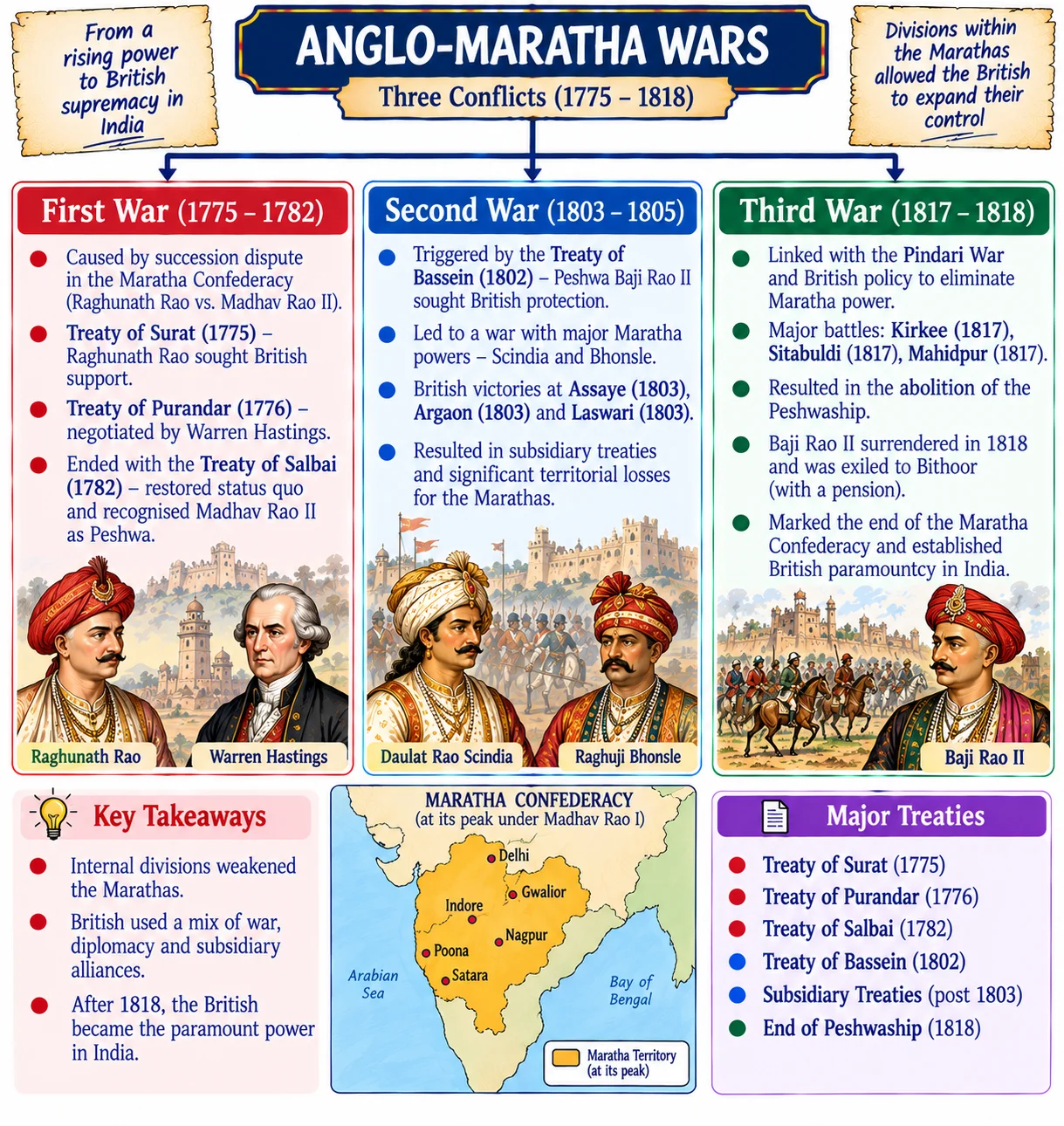 Figure 3: Key Campaigns, Major Battles, and Treaties of the Three Anglo-Maratha Wars (1775 – 1818 CE)
A. First Anglo-Maratha War (1775 – 1782 CE)
- Cause: Internal feud for the post of Peshwa. Following the murder of young Peshwa Narayanrao, his ambitious uncle Raghunath Rao (Raghoba) approached the British Bombay government and signed the Treaty of Surat (1775 CE), trading territories in exchange for military support.
- Course: The Calcutta Council under Warren Hastings annulled the treaty and signed the Treaty of Purandar (1776 CE) with Nana Phadnavis. Subsequent hostilities led to the British army’s encirclement and surrender at Wadgaon (Convention of Wadgaon, 1779 CE).
- Outcome — Treaty of Salbai (1782 CE): Mediated by Mahadji Scindia, it guaranteed 20 years of mutual peace between the British and the Marathas. British recognized Madhavrao II as the legitimate Peshwa and retained Salsette.
B. Second Anglo-Maratha War (1803 – 1805 CE)
- Cause: In 1802 CE, Yashwantrao Holkar defeated the combined armies of Peshwa Baji Rao II and Daulat Rao Scindia at the Battle of Hadapsar. The Peshwa fled to Bassein and signed the Treaty of Bassein (December 31, 1802 CE) with Lord Wellesley, accepting the Subsidiary Alliance.
- Outrage & Conflict: The Maratha sardars viewed the Treaty of Bassein as a surrender of Maratha national honor. Scindia and Bhonsle declared war on the British.
- Outcome: British forces under Arthur Wellesley (Battle of Assaye, 1803 CE) and Lord Lake (Battle of Laswari) routed the Maratha forces:
- Treaty of Deogaon (1803 CE): Raghuji Bhonsle surrendered Cuttack and entered the Subsidiary Alliance.
- Treaty of Surji-Anjangaon (1803 CE): Daulat Rao Scindia ceded the Ganga-Yamuna Doab, Delhi, and Agra to the British.
- Treaty of Rajghat (1805 CE): Yashwantrao Holkar signed peace with the British.
C. Third Anglo-Maratha War (1817 – 1818 CE)
- Cause: Resentment against British control under Governor-General Lord Hastings, coupled with British military operations against the Pindaris (irregular horsemen traditionally attached to Maratha armies).
- Course: Peshwa Baji Rao II made a desperate attempt to throw off British vassalage, attacking the British Residency at Pune. Scindia, Holkar, and Bhonsle also rose in revolt. The Marathas were defeated at Kirkee (Peshwa), Sitabuldi (Bhonsle), and Mahidpur (Holkar).
- Outcome:
- The office of the Peshwa was permanently abolished.
- Baji Rao II was deposed, stripped of all regnal authority, and exiled to Bithoor (near Kanpur) with an annual pension of ₹8 lakh.
- The Maratha Confederacy was formally dissolved, and its vast territories were incorporated into the Bombay Presidency. A small principality of Satara was carved out and given to Pratap Singh, a titular descendant of Shivaji.
3. Lord Wellesley and the Subsidiary Alliance System (1798 – 1805 CE)
The Subsidiary Alliance was an institutionalized diplomatic instrument perfected by Governor-General Lord Wellesley (1798 – 1805 CE) to reduce Indian princely states to British protectorates without incurring direct administrative liabilities.
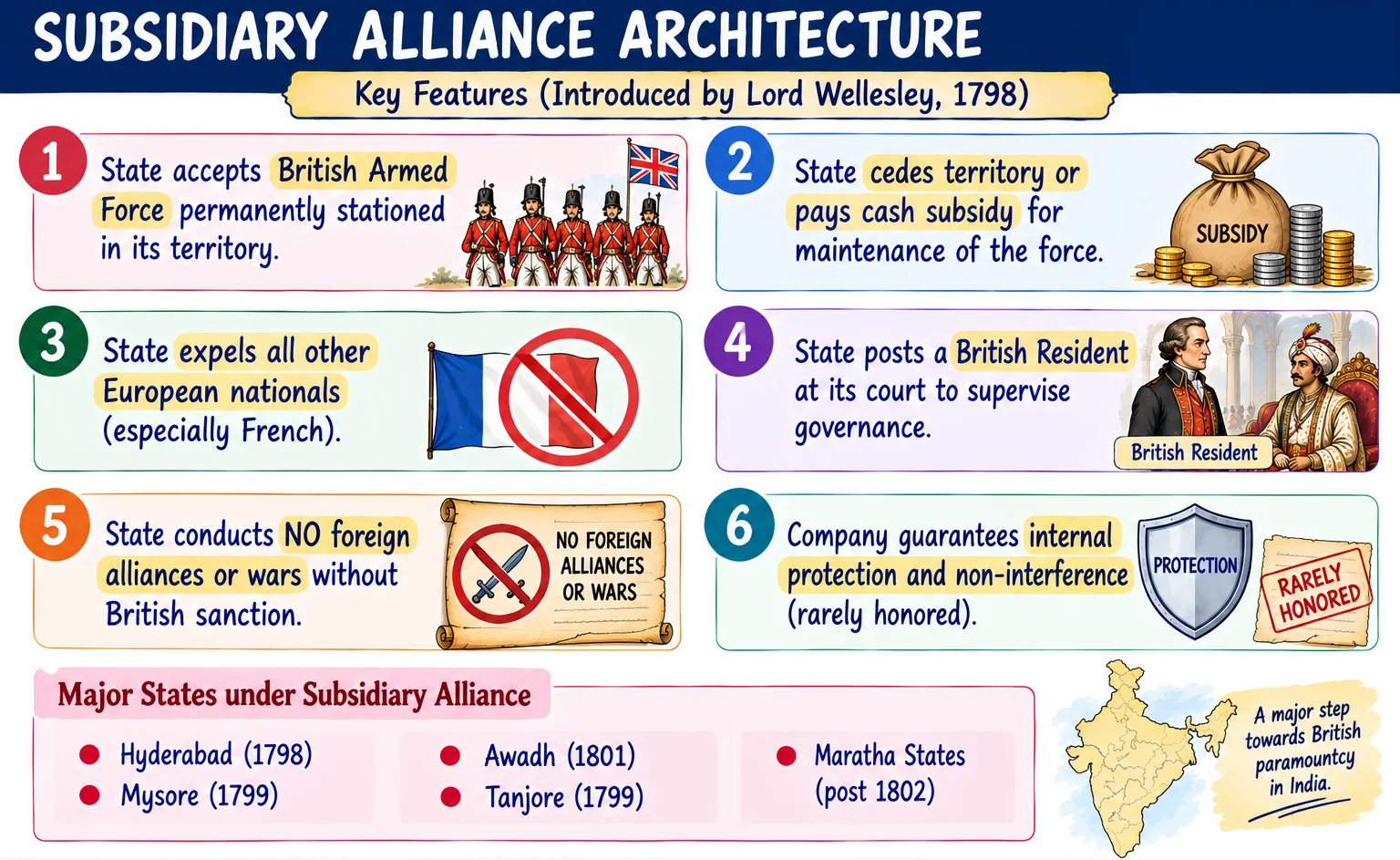 Figure 4: Core Pillars and Structural Architecture of Lord Wellesley’s Subsidiary Alliance System
- The native state accepted a permanent British Armed Force stationed within its borders.
- The ruler ceded territory or paid a regular cash subsidy for the maintenance of the armed contingent.
- The state expelled all other European nationals (especially French) from service.
- A British Resident was stationed at the native court to oversee political affairs.
- The state relinquished foreign diplomacy and could conduct no war or treaty without British permission.
- The Company pledged internal protection and non-interference (rarely observed in practice).
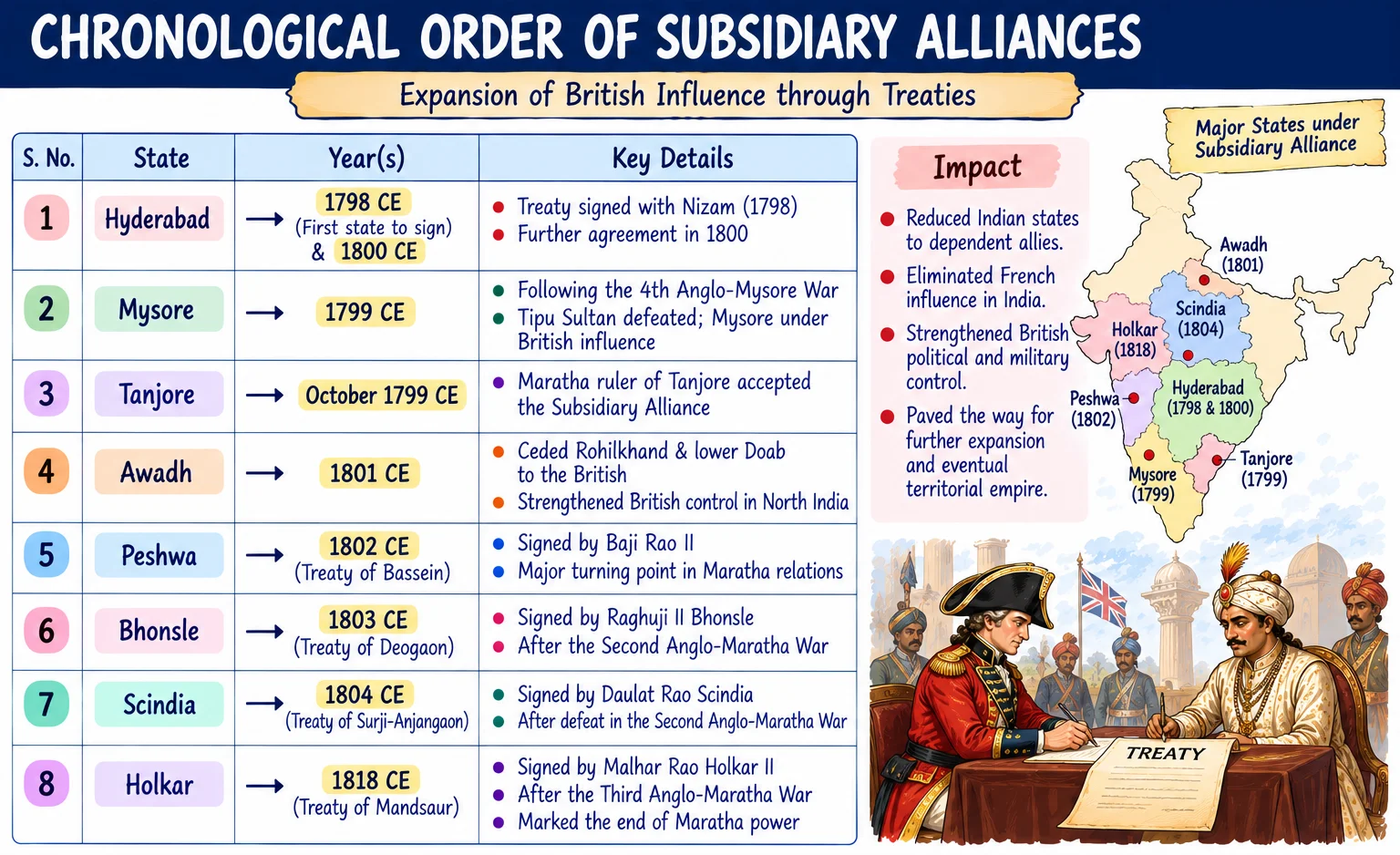 Figure 5: Chronological Sequence of Princely States Subjugated under the Subsidiary Alliance (1798 – 1818 CE)
Chronological Order of States Entering Subsidiary Alliance
| State / Dynasty | Year of Alliance | Key Landmark / Conditions |
|---|---|---|
| Hyderabad | 1798 CE (First state) & 1800 CE | Nizam Ali Khan disbanded French-trained corps |
| Mysore | 1799 CE | Imposed following the fall of Tipu Sultan at Srirangapatna |
| Tanjore | October 1799 CE | Subjugated under British administrative protection |
| Awadh | 1801 CE | Ceded Rohilkhand and the Lower Doab to the Company |
| Peshwa (Pune) | 1802 CE | Treaty of Bassein signed by Peshwa Baji Rao II |
| Bhonsle (Nagpur) | 1803 CE | Treaty of Deogaon (ceded Cuttack province) |
| Scindia (Gwalior) | 1804 CE | Treaty of Surji-Anjangaon (ceded Delhi, Agra, Doab) |
| Holkar (Indore) | 1818 CE | Treaty of Mandsaur after Third Anglo-Maratha War |
4. The Anglo-Sikh Wars and Annexation of Punjab (1845 – 1849 CE)
Following the death of Maharaja Ranjit Singh in 1839 CE, the sovereign Sikh Empire of Punjab plunged into political instability, factional palace murders, and military insubordination within the Khalsa Army councils.
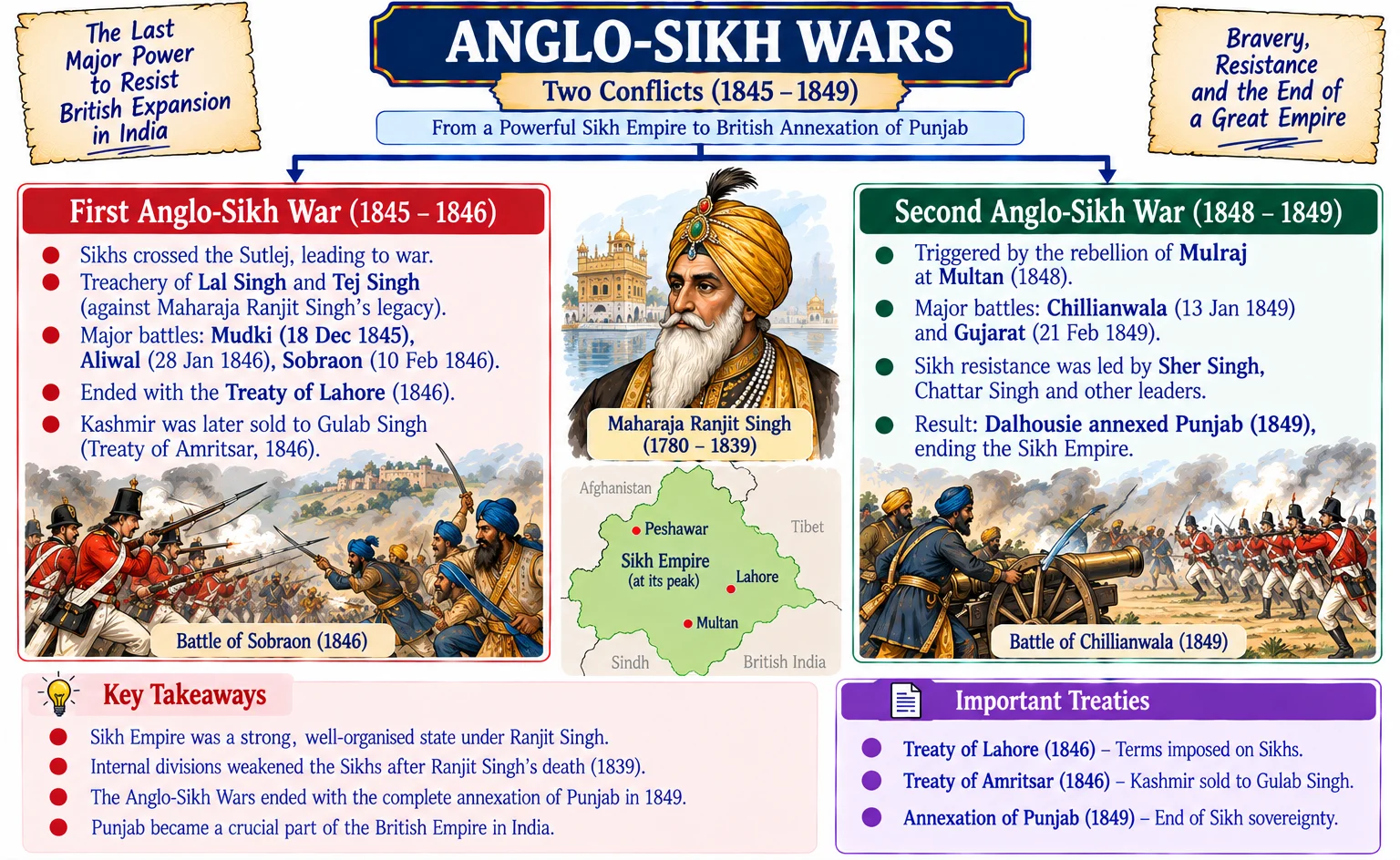 Figure 6: Overview of the First and Second Anglo-Sikh Wars Leading to the Direct Annexation of Punjab
A. First Anglo-Sikh War (1845 – 1846 CE)
- Cause: The Sikh army crossed the Sutlej River in December 1845 CE, which the British treated as an act of war under Governor-General Lord Hardinge.
- Course: Fierce battles took place at Mudki, Ferozeshah, Aliwal, and Sobraon. Despite extraordinary courage from the Sikh soldiers, treacherous Sikh commanders (Lal Singh and Tej Singh) collaborated secretly with the British, leading to the Sikh defeat at Sobraon (1846 CE).
- Outcome — Treaty of Lahore (March 9, 1846 CE):
- Jalandhar Doab (territory between the Beas and Sutlej) was ceded to the British.
- A heavy war indemnity of ₹1.5 crore was imposed. Because the Lahore treasury could only pay ₹50 lakh, the British sold Kashmir to Raja Gulab Singh of Jammu for ₹75 lakh under the separate Treaty of Amritsar (1846 CE).
- Sir Henry Lawrence was appointed British Resident at Lahore. Minor prince Duleep Singh was recognized as Maharaja with Rani Jindan as regent.
B. Second Anglo-Sikh War (1848 – 1849 CE)
- Cause: Resentment against British administrative interference and the exile of Rani Jindan. In 1848 CE, Mulraj, the Governor of Multan, revolted and killed two British officers, sparking a widespread Sikh rebellion supported by Chattar Singh Attariwala.
- Course: Governor-General Lord Dalhousie seized the opportunity to launch a full-scale invasion. Battles were fought at Ramnagar, Chillianwala (an indecisive, bloody encounter), and Gujarat (February 21, 1849 CE).
- Battle of Gujarat: Celebrated as the “Battle of the Guns,” where British heavy artillery decisively crushed the Sikh forces.
- Outcome:
- Lord Dalhousie issued an imperial proclamation annexing Punjab to the British Empire on March 29, 1849 CE.
- Maharaja Duleep Singh was pensioned off and sent to England.
- The legendary Koh-i-Noor diamond was surrendered by Duleep Singh to Queen Victoria.
- Punjab was placed under a three-member Board of Administration comprising Sir Henry Lawrence, John Lawrence, and Charles Mansel.
5. Lord Dalhousie and the Doctrine of Lapse (1848 – 1856 CE)
Governor-General Lord Dalhousie (1848 – 1856 CE) was a staunch imperialist who believed that the direct annexation of native states would enhance British revenues and extend the benefits of centralized British governance.
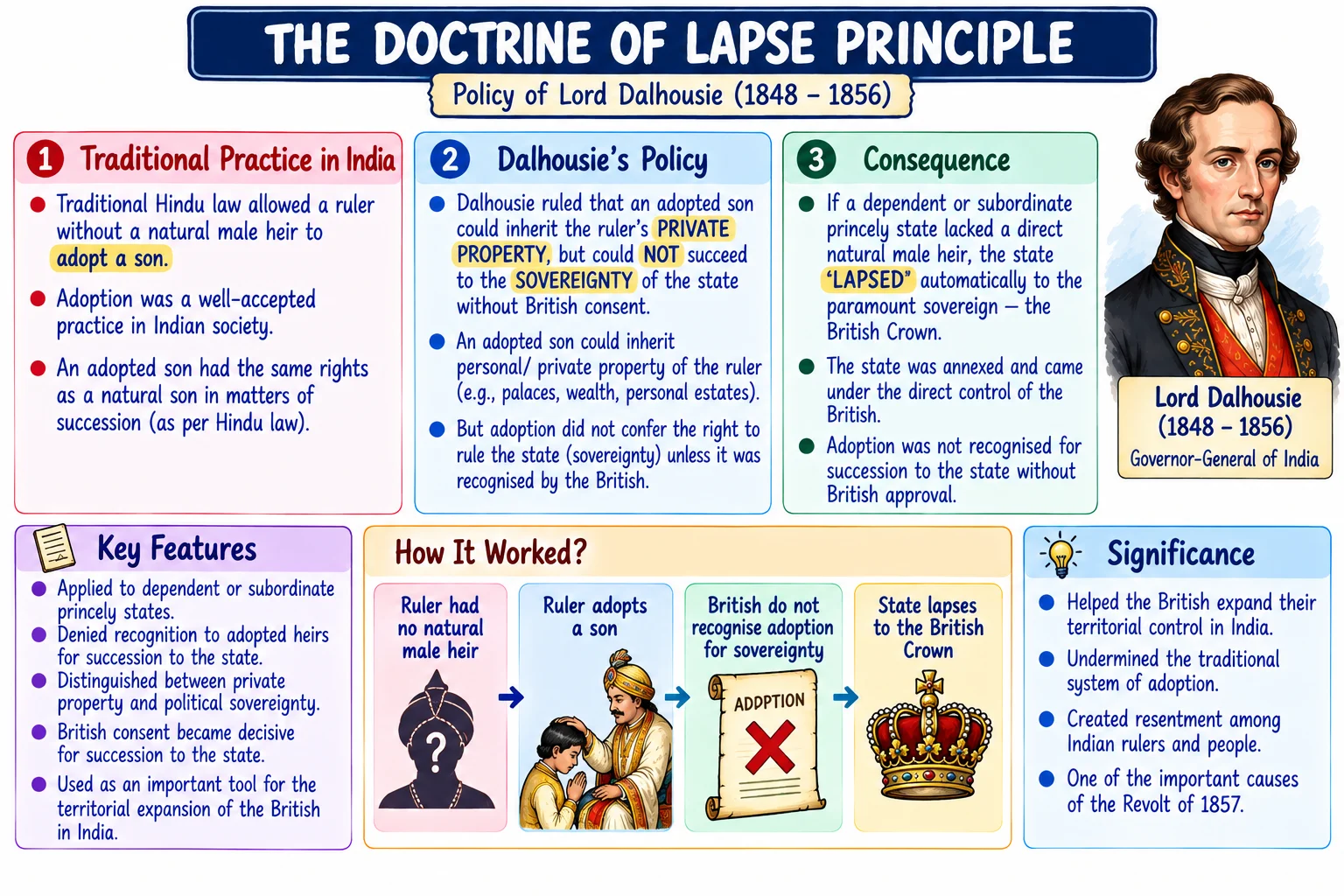 Figure 7: Legal Mechanisms, Rules of Adoption, and Imperial Scope of the Doctrine of Lapse
- Traditional Hindu customs allowed a ruler without a natural male heir to adopt a son to continue personal and dynastic rights.
- Dalhousie asserted that an adopted son could inherit the ruler’s private property, but could not succeed to the political sovereignty of the state without the explicit approval of the Paramount Power (the British).
- If a dependent princely state lacked a direct natural male heir, the state automatically “lapsed” (was annexed) to the British sovereign domain.
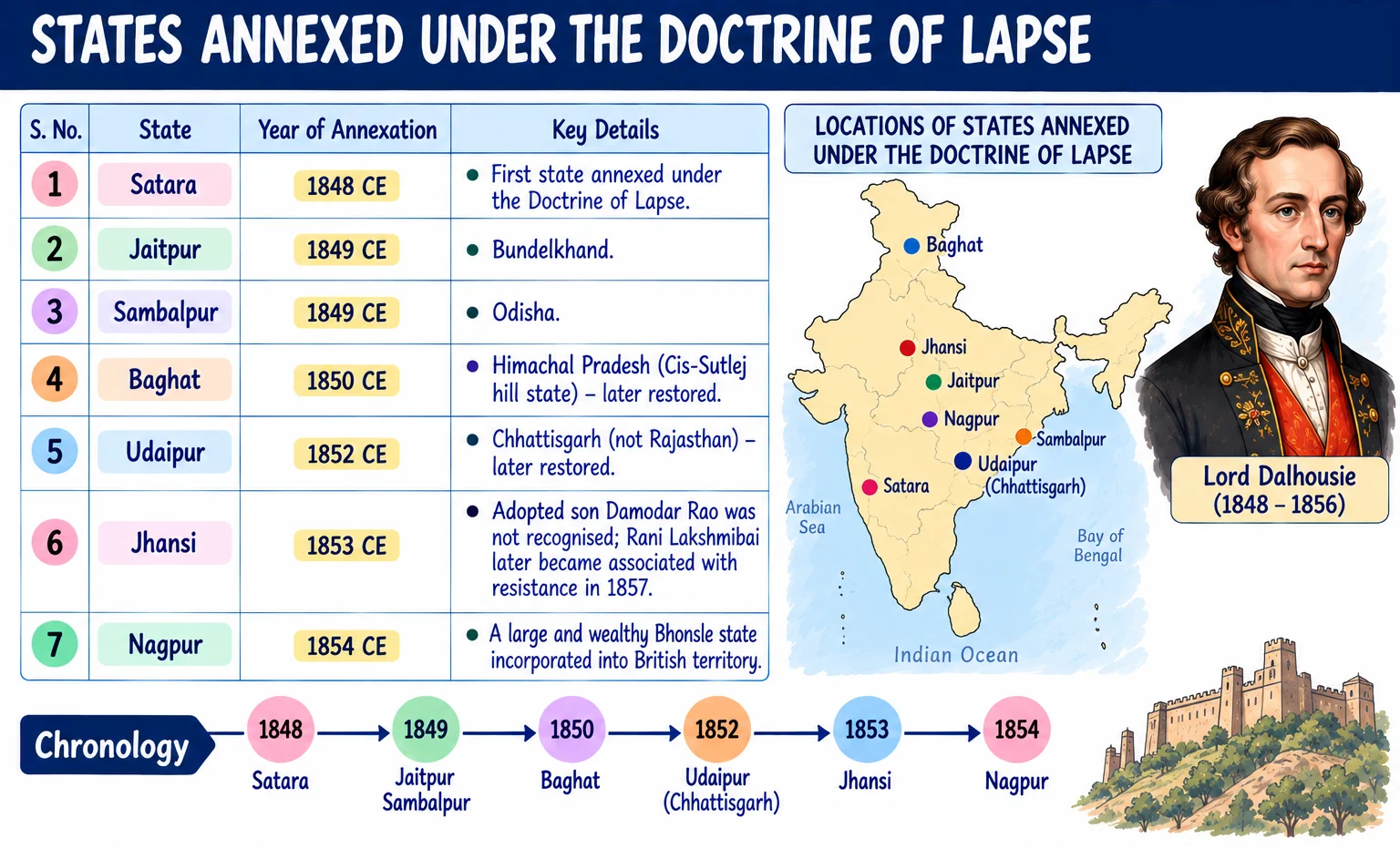 Figure 8: Geographic Distribution and Chronological Annexation of States under the Doctrine of Lapse (1848 – 1854 CE)
States Annexed Under the Doctrine of Lapse
| Princely State | Year Annexed | Historical Significance |
|---|---|---|
| Satara | 1848 CE | First state annexed under the Doctrine of Lapse |
| Jaitpur | 1849 CE | Located in Bundelkhand region |
| Sambalpur | 1849 CE | Located in modern Odisha |
| Baghat | 1850 CE | Located in Himachal Pradesh (annexation later overturned by Court of Directors) |
| Udaipur | 1852 CE | Located in Chhattisgarh (later reversed by Lord Canning) |
| Jhansi | 1853 CE | Adopted son Anand Rao (Damodar Rao) rejected; led to Rani Lakshmibai’s 1857 resistance |
| Nagpur | 1854 CE | Vast cotton-producing territory incorporated into the British realm |
Annexation of Awadh on Grounds of “Maladministration” (1856 CE)
- The Doctrine of Lapse could not be applied to Awadh (Oudh) because Nawab Wajid Ali Shah had several direct male heirs.
- Dalhousie utilized a detailed report prepared by British Resident James Outram, highlighting systemic misgovernance, corruption, and peasant distress.
- On February 7, 1856 CE, Dalhousie formally annexed Awadh on the pretext of “Gross Maladministration.” Nawab Wajid Ali Shah was deposed and exiled to Metiabruz (Calcutta).
- Impact: The annexation provoked widespread fury across northern India and deeply aggrieved the sepoys of the Bengal Army—nearly 75,000 of whom hailed from Awadh—forming a primary trigger for the Revolt of 1857.
6. Quick Examination Facts
| Topic / Historical Landmark | Key Exam Fact |
|---|---|
| Architect of the Subsidiary Alliance | Lord Wellesley (Introduced 1798 CE) |
| First State to Accept Subsidiary Alliance | Hyderabad (1798 CE, under Nizam Ali Khan) |
| Treaty Concluding 1st Anglo-Mysore War | Treaty of Madras (1769 CE) |
| Death of Hyder Ali Year & Cause | 1782 CE (During 2nd Anglo-Mysore War, died of cancer) |
| Treaty Imposing 50% Territory Loss on Tipu | Treaty of Srirangapatna (1792 CE, Lord Cornwallis) |
| Death of Tipu Sultan Date | May 4, 1799 CE (Fourth Anglo-Mysore War at Srirangapatna) |
| Treaty Securing 20 Years of Peace with Marathas | Treaty of Salbai (1782 CE, Warren Hastings & Mahadji Scindia) |
| Treaty of Bassein Date & Signatory | December 31, 1802 CE (Peshwa Baji Rao II accepted Subsidiary Alliance) |
| Abolition of the Office of Peshwa | 1818 CE (Following 3rd Anglo-Maratha War; Baji Rao II exiled to Bithoor) |
| Treaty Resulting in Sale of Kashmir | Treaty of Amritsar (1846 CE, sold to Raja Gulab Singh for ₹75 lakh) |
| “Battle of the Guns” in Sikh Wars | Battle of Gujarat (February 21, 1849 CE, decisive British artillery victory) |
| Governor-General who Annexed Punjab | Lord Dalhousie (March 29, 1849 CE) |
| Architect of the Doctrine of Lapse | Lord Dalhousie (1848 – 1856 CE) |
| First State Annexed under Doctrine of Lapse | Satara (1848 CE) |
| Annexation of Awadh Year & Pretext | 1856 CE, on grounds of “Gross Maladministration” (James Outram’s report) |
7. Conclusion
Between 1767 and 1856 CE, the British East India Company dismantled every sovereign power across the subcontinent. The elimination of Tipu Sultan’s Mysore, the dissolution of the Maratha Confederacy, and the annexation of the Sikh Empire systematically neutralized native military resistance. Simultaneously, the Subsidiary Alliance disarmed native courts from within, while the Doctrine of Lapse brought extensive territories under direct British rule. By 1856, the British held uncontested political paramountcy over India—a centralized apparatus whose political, economic, and administrative pressures culminated in the Revolt of 1857.
British Expansion and Consolidation in India (1767 – 1856 CE)
Practice Quiz • 15 MCQs