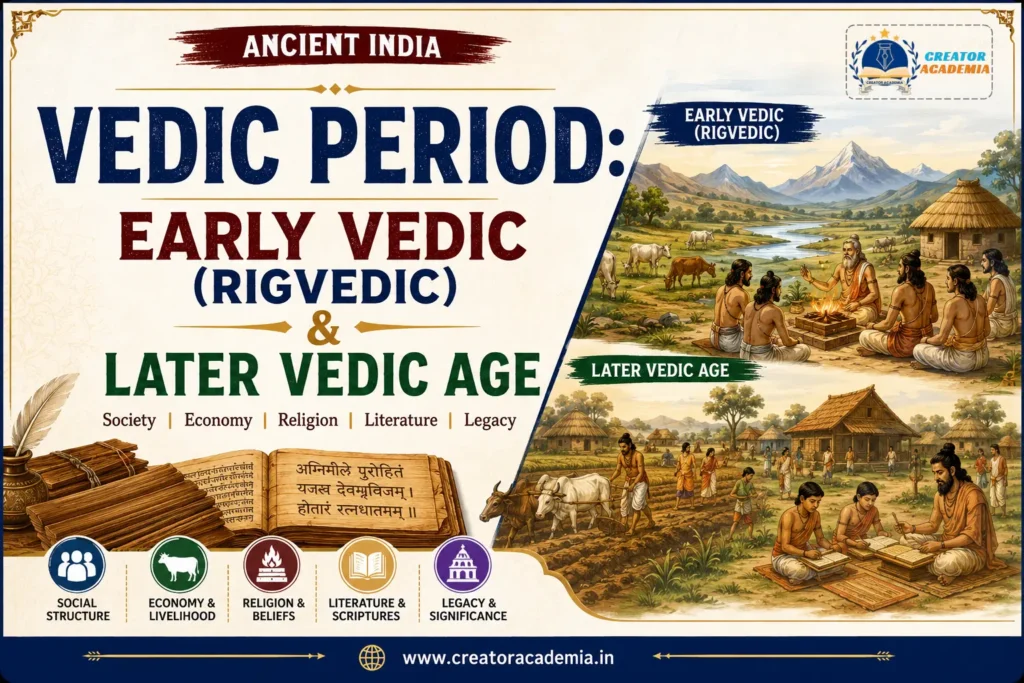
Vedic Period: Early Vedic (Rigvedic) and Later Vedic Age
Introduction
Following the decline of the urban Indus Valley Civilization around 1900 BCE, a new cultural era emerged on the Indian subcontinent known as the Vedic Period (c. 1500 – 600 BCE). Named after the Vedas—the earliest sacred scriptures of Hinduism—this period marks the foundation of Indo-Aryan culture, early social stratification, pastoral-to-agricultural transitions, and the eventual rise of territorial states (Mahajanapadas).
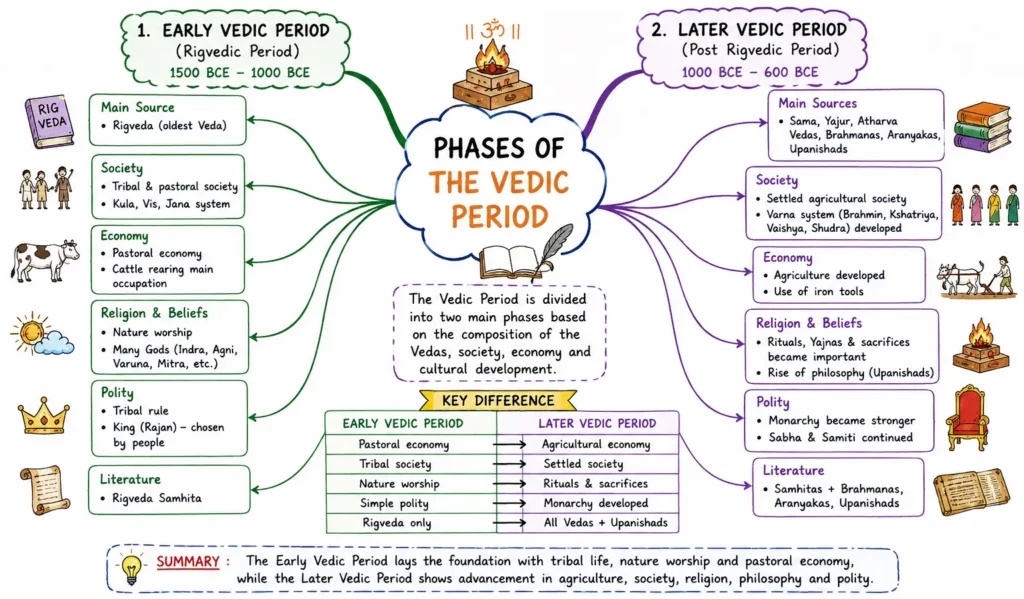
The Vedic Period is historically divided into two distinct phases based on literary, geographical, and archaeological evidence:
1. Vedic Literature: The Core Primary Sources
The primary historical source for reconstructing this era is Vedic Literature, categorized into two broad divisions:
- Shruti Literature (“That which is heard”): Revealed sacred knowledge, considered timeless and eternal (e.g., the four Vedas).
- Smriti Literature (“That which is remembered”): Auxiliary texts composed by human sages to explain Vedic traditions (e.g., Vedangas, Puranas, Epics).
A. The Four Samhitas (Vedas)
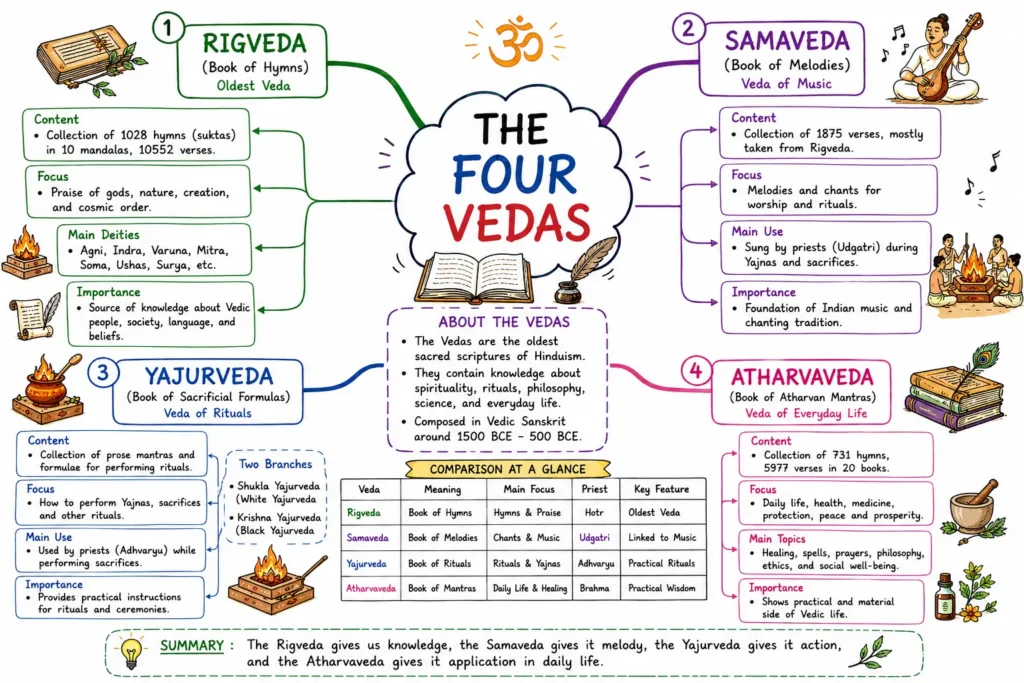
- Rigveda: The oldest religious text in the world. Contains 1,028 hymns (Suktas) divided into 10 Mandalas (books). Mandalas 2 to 7 are the oldest (Family Books), while Mandalas 1 and 10 were added later. The famous Gayatri Mantra (addressed to the deity Savitr) is in the 3rd Mandala, and the Purusha Sukta (explaining the origin of the four Varnas) is in the 10th Mandala.
- Samaveda: The Veda of melodies and chants. Contains 1,810 verses, mostly taken from the Rigveda, set to musical notes. It represents the origin of Indian classical music.
- Yajurveda: The Veda of sacrificial formulas and procedures. It is divided into two parts: Shukla Yajurveda (White / verse) and Krishna Yajurveda (Black / prose).
- Atharvaveda: Formulated later than the first three (Trayi). Contains 731 hymns consisting of magical spells, charms, and remedies to ward off evil, diseases, and spirits. Reflects popular folk traditions and early medicine.
B. Auxiliary Vedic Texts
- Brahmanas: Prose commentaries attached to each Veda explaining the mystical meaning, symbolism, and exact rules for performing sacrifices.
- Aranyakas (“Forest Books”): Philosophical treatises written for hermits and students living in forests, bridging ritualistic Brahmanas and philosophical Upanishads.
- Upanishads (“To sit down near a teacher”): The culmination of Vedic philosophy, known as Vedanta (“End of the Vedas”). There are 108 Upanishads (e.g., Mundaka Upanishad, which contains the national motto Satyameva Jayate). They focus on concept of Brahman (Ultimate Reality) and Atman (Individual Soul).
- Vedangas: Six auxiliary disciplines required for the correct pronunciation, grammar, and understanding of the Vedas:
- Shiksha (Phonetics)
- Kalpa (Ritual Canon)
- Vyakarana (Grammar – Panini’s Ashtadhyayi)
- Nirukta (Etymology – Yaska)
- Chhanda (Metrics)
- Jyotisha (Astronomy)
2. Geographical Extent and Migration
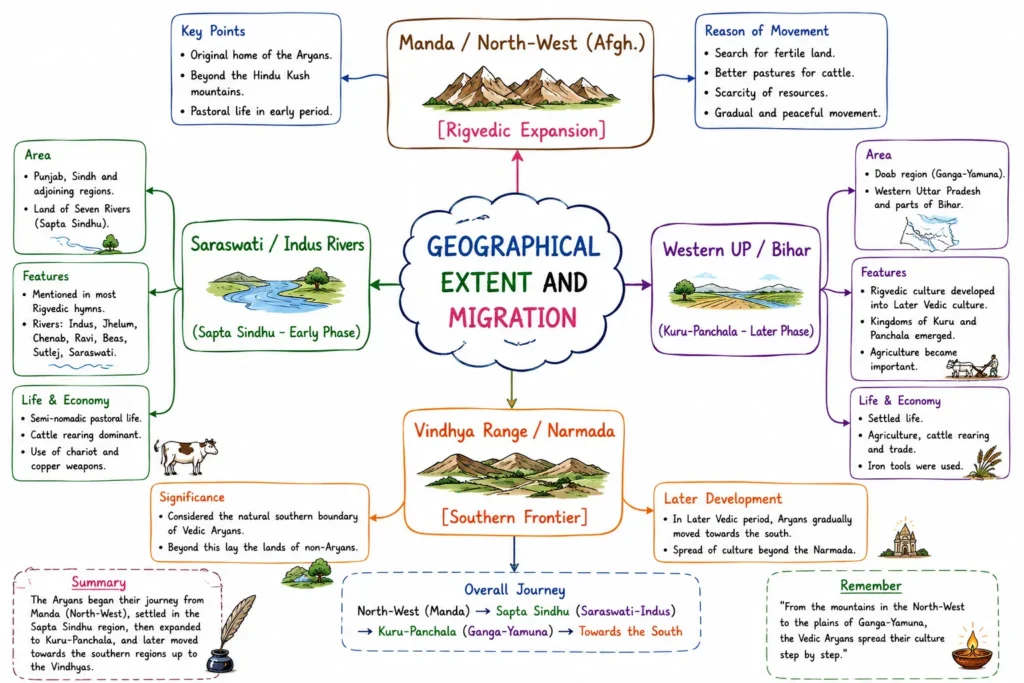
- Early Vedic Geography (1500 – 1000 BCE): Concentrated in the region of Sapta Sindhu (Land of Seven Rivers): Indus (Sindhu), Jhelum (Vitasta), Chenab (Asikni), Ravi (Parushni), Beas (Vipasa), Sutlej (Shutudri), and the sacred Saraswati (termed Naditarna—best of rivers). The region of Afghanistan (Kubha/Kabul, Swat/Suvastu) is also mentioned.
- Later Vedic Geography (1000 – 600 BCE): Indo-Aryans expanded eastward into the Gangetic Plains (Madhyadesa and Aryavarta), clearing dense forests using iron axes. Core political centers shifted to the Kuru (Delhi-Meerut) and Panchala (Bareilly-Badaun) regions, reaching eastern Bihar (Videha).
3. Comparative Analysis: Early vs. Later Vedic Period
| Parameter | Early Vedic (Rigvedic) Period (1500 – 1000 BCE) | Later Vedic Period (1000 – 600 BCE) |
|---|---|---|
| Geographical Center | Sapta Sindhu (Punjab / Haryana / NWFP) | Western & Central Gangetic Plains (Aryavarta) |
| Metal Technology | Copper and Bronze (Ayas) | Iron (Shyama Ayas / Krishna Ayas) |
| Economic Base | Pastoral/Nomadic economy; cattle rearing primary (Gau = wealth) | Agrarian economy; settled agriculture primary |
| Political Unit | Jana (Tribal kingdom); no fixed territorial state | Janapada (Territorial realm); rising kingship |
| King’s Status | Rajan (Tribal chief); non-hereditary, limited power | Hereditary King (Samrat / Ekarat); absolute powers |
| Popular Assemblies | Sabha, Samiti, Vidatha, Gana held immense influence | Vidatha disappeared; Sabha & Samiti lost power to King |
| Taxation System | Voluntary offerings (Bali) given to the chief | Mandatory, regular taxes (Bali, Bhaga, Shulka) |
| Social Structure | Flexible Varna system based on occupation; high mobility | Rigid Varna system based on birth; hierarchical |
| Position of Women | High status; attended assemblies (Sabha); educated (e.g., Gargi, Lopamudra); no child marriage | Status declined; excluded from assemblies; child marriage emerged; birth of daughter viewed as source of misery |
| Primary Deities | Nature gods: Indra (Rain/War – 250 hymns), Agni (Fire – 200 hymns), Varuna (Water/Cosmic order) | Trimurti figures: Prajapati (Creator), Vishnu (Preserver), Rudra/Shiva (Destroyer) |
| Religious Practice | Simple prayers, simple milk/grain offerings | Complex, costly animal sacrifices (Yajnas: Rajasuya, Ashvamedha, Vajapeya) |
4. Key Political and Social Concepts
A. Administration and Assemblies
- Sabha: Assembly of elders, elites, and Brahmans. Handled judicial and administrative functions.
- Samiti: General assembly of the entire tribe (Jana). Responsible for electing or approving the Rajan.
- Vidatha: Oldest tribal assembly where men and women participated in religious and secular functions.
- Key Officials:
- Purohita: Chief priest and advisor.
- Senani: Head of the military forces.
- Vrajapati: Officer in charge of pasture lands.
- Gramani: Head of the village.
- Sangrahitri: Treasurer (Later Vedic).
- Bhagadugha: Tax collector (Later Vedic).
B. Social Categories & Gotra System
- Gotra System: Evolved during the Later Vedic period. Literally meaning “cow pen,” it came to signify common lineage from a primary Vedic sage (Rishi). Exogamy within the same Gotra (Sagotra marriage) was prohibited.
- Four Varnas: Brahmanas (Priests), Kshatriyas (Rulers/Warriors), Vaishyas (Agriculturists/Merchants), and Shudras (Laborers/Servants).
- Four Ashramas (Stages of Life): Detailed in the Jabala Upanishad:
- Brahmacharya (Student life)
- Grihastha (Householder life)
- Vanaprastha (Partial renunciation/forest retirement)
- Sannyasa (Complete renunciation)
Quick Examination Facts
| Feature / Term | Key Exam Fact |
|---|---|
| Oldest Veda | Rigveda (1,028 hymns, 10 Mandalas) |
| Gayatri Mantra Origin | 3rd Mandala of Rigveda (composed by Sage Viswamitra) |
| Purusha Sukta Location | 10th Mandala of Rigveda (describes 4 Varnas) |
| Veda of Music | Samaveda |
| National Motto “Satyameva Jayate” | Taken from Mundaka Upanishad |
| Meaning of “Vedanta” | Upanishads (End of the Vedas) |
| Rigvedic term for Copper/Bronze | Ayas |
| Later Vedic term for Iron | Shyama Ayas or Krishna Ayas |
| Most Important Rigvedic God | Indra (250 hymns; known as Purandara – destroyer of forts) |
| Sacrifice for Imperial Sovereignty | Ashvamedha Yajna (Horse Sacrifice) |
| Sacrifice for Royal Consecration | Rajasuya Yajna |
| Chariot Race Ritual | Vajapeya Yajna |
| First Mention of 4 Ashramas | Jabala Upanishad |
| First Mention of Gotra | Atharvaveda / Later Vedic Literature |
Conclusion
The Vedic Period laid the fundamental cultural, religious, and social framework of ancient India. The transition from the egalitarian, pastoral society of the Rigvedic Age to the settled, agrarian, and hierarchical structures of the Later Vedic Age set the stage for urban revival (Second Urbanization), the rise of powerful territorial kingdoms (Mahajanapadas), and heterodox philosophical movements like Buddhism and Jainism in the 6th century BCE.
Vedic Period: Early & Later Vedic Age
Practice Quiz
| Some Important Links | |
| Download “Vedic Period” PDF | Click Here |