Subhas Chandra Bose, the Forward Bloc, and the Indian National Army (INA) (1939 – 1945 CE)
From his daring wartime escape from Calcutta across the Khyber Pass to Berlin, to his perilous submarine voyage around the Cape of Good Hope to Tokyo, Bose revived and restructured the Indian National Army (Azad Hind Fauj). Proclaiming the Provisional Government of Free India (Arzi Hukumat-e-Azad Hind), Netaji led an armed liberation army to the borders of Northeast India with the war cry “Chalo Dilli!” Though the military campaign stalled before Imphal and Kohima, the subsequent INA Red Fort Trials and the Royal Indian Navy (RIN) Mutiny of 1946 shattered the colonial armed forces’ loyalty to the British Crown, sounding the death knell of the British Raj.
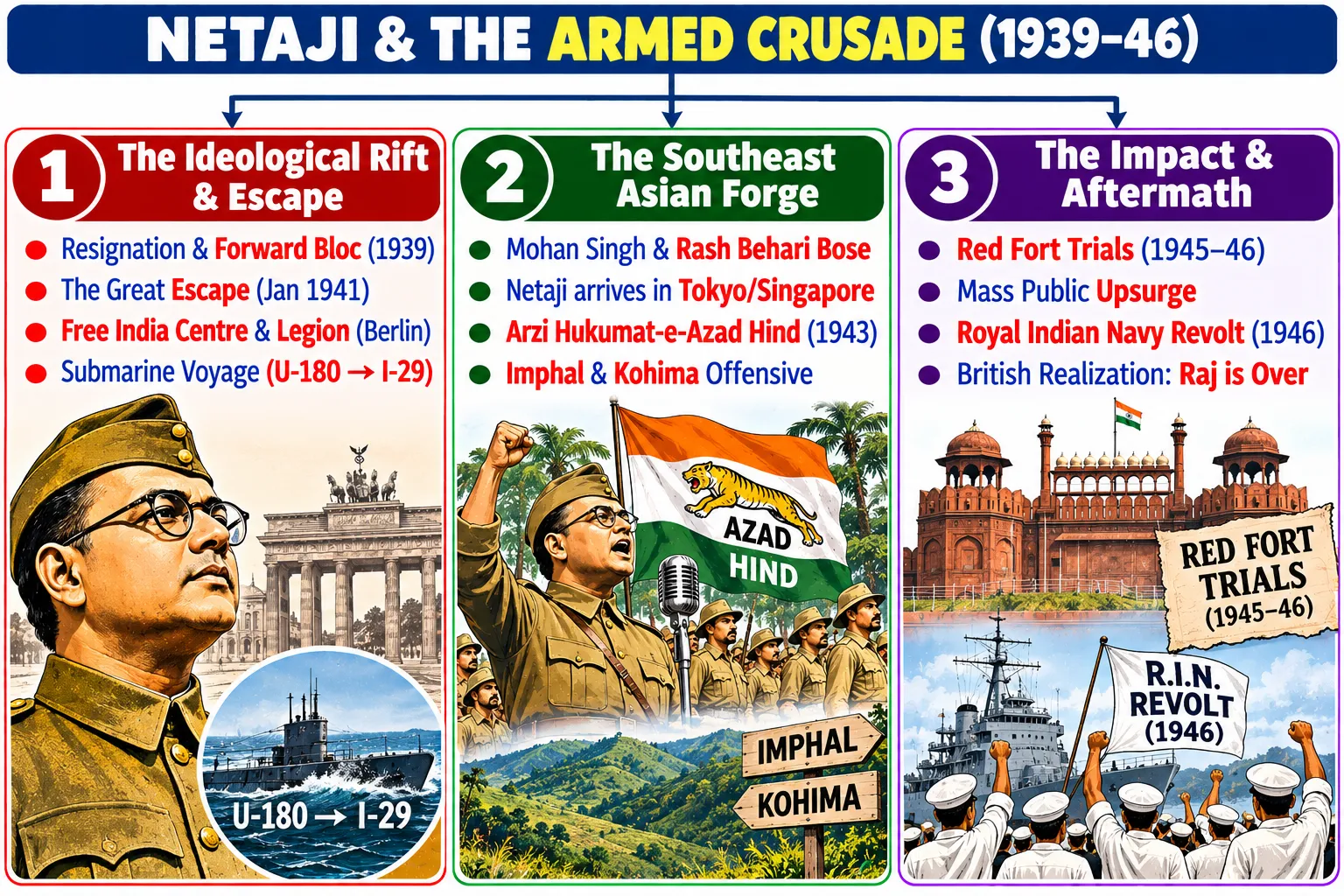 Figure 1: Strategic Progression of Netaji’s Armed Struggle (1939–1946)
- The Ideological Rift & Escape: Resignation after Tripuri, Forward Bloc foundation (1939), the Great Escape from Calcutta (Jan 1941), Free India Centre in Berlin, and the historic submarine voyage (U-180 to I-29).
- The Southeast Asian Forge: First phase under Captain Mohan Singh and Rash Behari Bose, Netaji assuming supreme command, formation of the Provisional Government (Arzi Hukumat-e-Azad Hind), and the Imphal-Kohima offensive.
- The Impact & Aftermath: Red Fort Trials of Shah Nawaz, Sahgal, and Dhillon, the nationwide mass upsurge, the Royal Indian Navy (RIN) Mutiny (1946), and the permanent shattering of British armed loyalty.
1. Ideological Divergence and the Great Escape (1939 – 1941 CE)
A. Subhas Chandra Bose vs. The Gandhian Philosophy
Subhas Chandra Bose (1897 – 1945 CE) was a charismatic youth leader, radical socialist, and former Indian Civil Service (ICS) recruit who resigned from the colonial bureaucracy in 1921 under the mentorship of Deshbandhu Chittaranjan Das. While Gandhi and Bose shared mutual admiration—Gandhi called Bose the “Patriot of Patriots,” while Bose was the first to address Gandhi as the “Father of the Nation” (Singapore broadcast, July 1944)—their strategic methodologies were fundamentally distinct:
| Parameter | Mahatma Gandhi | Subhas Chandra Bose (Netaji) |
|---|---|---|
| Philosophical Base | Uncompromising Non-Violence (Ahimsa) and Moral Truth (Satya). | Pragmatic Realpolitik; justified military force to overthrow imperialist tyranny. |
| View of the Enemy | Moral conversion of the opponent; rejected taking unfair advantage of Britain’s wartime crises. | Exploited Britain’s wartime distress (“Britain’s difficulty is India’s opportunity”). |
| Economic Vision | Decentralized village republics; charkha, khadi, and cottage village industries. | Modern, heavy state-led industrialization and national planning on socialist models. |
| International Alliances | Opposed alliances with totalitarian or Axis fascist regimes. | Pragmatically formed military alliances with Axis powers (Germany, Japan, Italy) to secure Indian liberation. |
B. The Forward Bloc and House Arrest (1939 – 1940 CE)
- Founding of the Forward Bloc (May 1939): Following his resignation as Congress President after the Tripuri Crisis, Bose founded the Forward Bloc inside the Congress to consolidate left-wing, socialist, and radical anti-imperialist forces.
- Protest and Disciplinary Action: When Bose organized nationwide protests in July 1939 against an AICC resolution prohibiting provincial Congress committees from launching satyagrahas without Working Committee approval, the Congress High Command disqualified him from holding any elective Congress office for three years.
- Holwell Monument Agitation (July 1940): Bose launched a campaign in Calcutta demanding the removal of the Holwell Monument (commemorating the exaggerated “Black Hole Tragedy”). He was arrested under the Defence of India Act and interned in Presidency Jail.
- The Hunger Strike: In November 1940, Bose went on a hunger strike unto death in jail, protesting unlawful detention. Alarmed that his death in custody would spark riots, the British Government transferred him to house arrest at his ancestral residence at 38/2 Elgin Road, Calcutta, under continuous police surveillance.
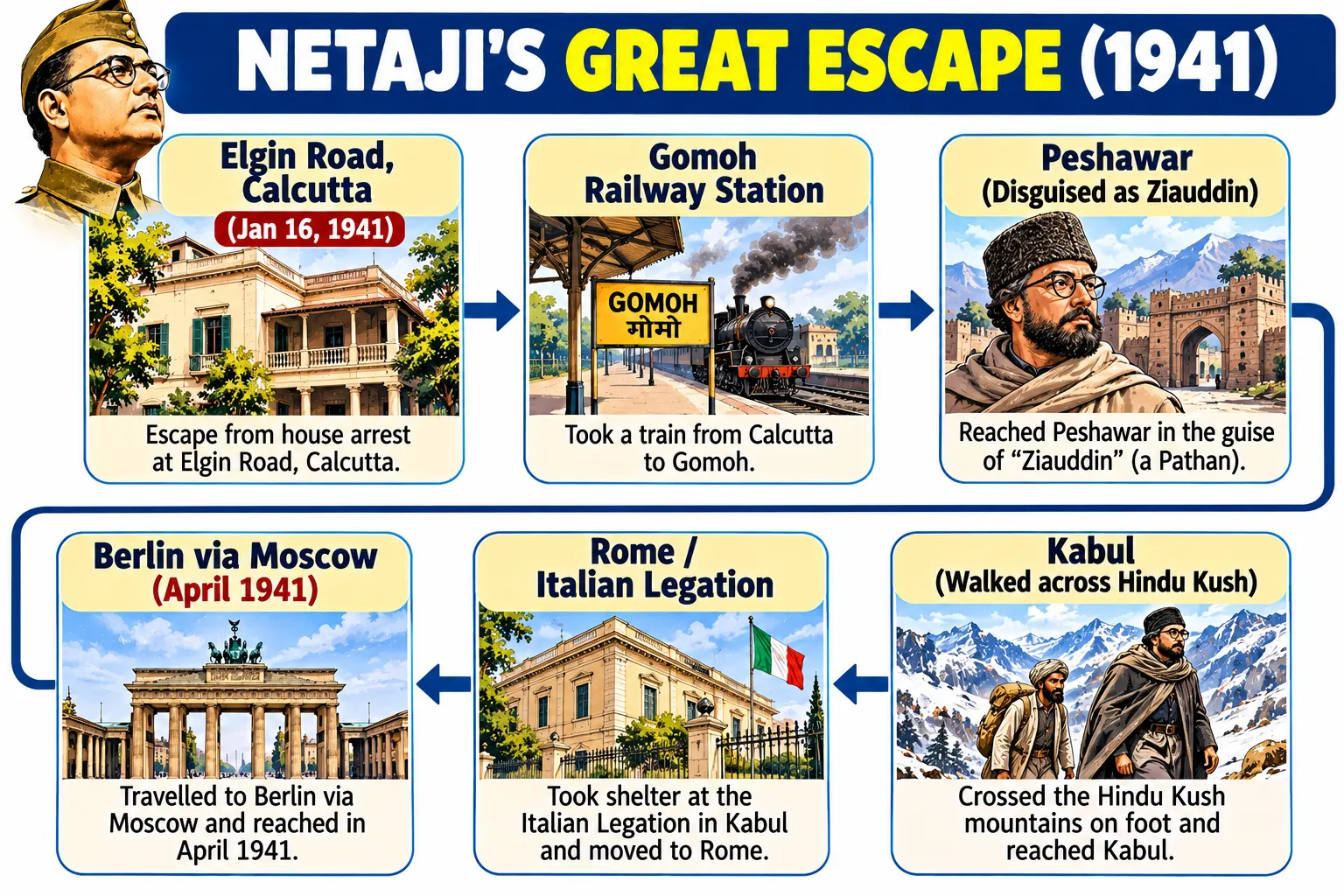 Figure 2: Chronological Route of Netaji’s Historic Escape from Calcutta to Berlin
C. “The Great Escape” (Mahanishkraman — January 1941)
Bose engineered one of the most audacious escapes in modern military history:
- 1. The Disguise: Disguised as an elderly, deaf-and-dumb North Indian Muslim insurance agent named Maulvi Ziauddin, Bose slipped past British intelligence guards past midnight on January 16–17, 1941, driven by his nephew Sisir Kumar Bose in a Wanderer car.
- 2. The Trek Across Frontiers: Boarded the Kalka Mail at Gomoh (Jharkhand), reached Peshawar (NWFP), and was guided across the tribal territory into Afghanistan by Forward Bloc leader Mian Akbar Shah and peasant revolutionary Bhagat Ram Talwar (code-name “Silver”).
- 3. Kabul to Berlin: Stranded in Kabul for weeks under the alias Orlando Mazzotta (holding an Italian diplomatic passport provided by the Italian legation), Bose crossed the Soviet Union by train from Samarkand and arrived in Berlin, Germany, on April 2, 1941.
2. In Axis Europe: The Free India Centre and Indian Legion (1941 – 1943 CE)
In Berlin, Bose received support from the German Imperial Foreign Office:
- The Free India Centre (Azad Hind Radio): Bose established the Free India Centre in Berlin and launched regular shortwave broadcasts on Azad Hind Radio beginning in early 1942. Broadcasting in English, Hindi, Bengali, Tamil, and Urdu, Netaji exposed British war propaganda and announced his intent to build a liberation army.
- The Title “Netaji”: It was in Berlin in 1941 that Indian expatriates and soldiers first addressed him with the honorific “Netaji” (“Respected Leader”) and adopted the patriotic greeting “Jai Hind” (coined by Zain-ul-Abideen Hassan / Chempakaraman Pillai) and the national anthem Jana Gana Mana.
- The Indian Legion (Tiger Legion): Bose recruited Indian prisoners of war (POWs) captured by General Erwin Rommel’s Afrika Korps in North Africa, organizing a military unit of nearly 3,000 soldiers called the Indian Legion (Freies Indien).
- Meeting with Adolf Hitler (May 1942): Bose met German Chancellor Adolf Hitler on May 29, 1942. Bose requested German military backing and protested anti-Indian remarks in Hitler’s book Mein Kampf. Realizing that Nazi Germany was getting bogged down on the Russian front and could not render operational assistance to India, Netaji shifted his focus to Southeast Asia, where imperial Japan was sweeping across the Pacific.
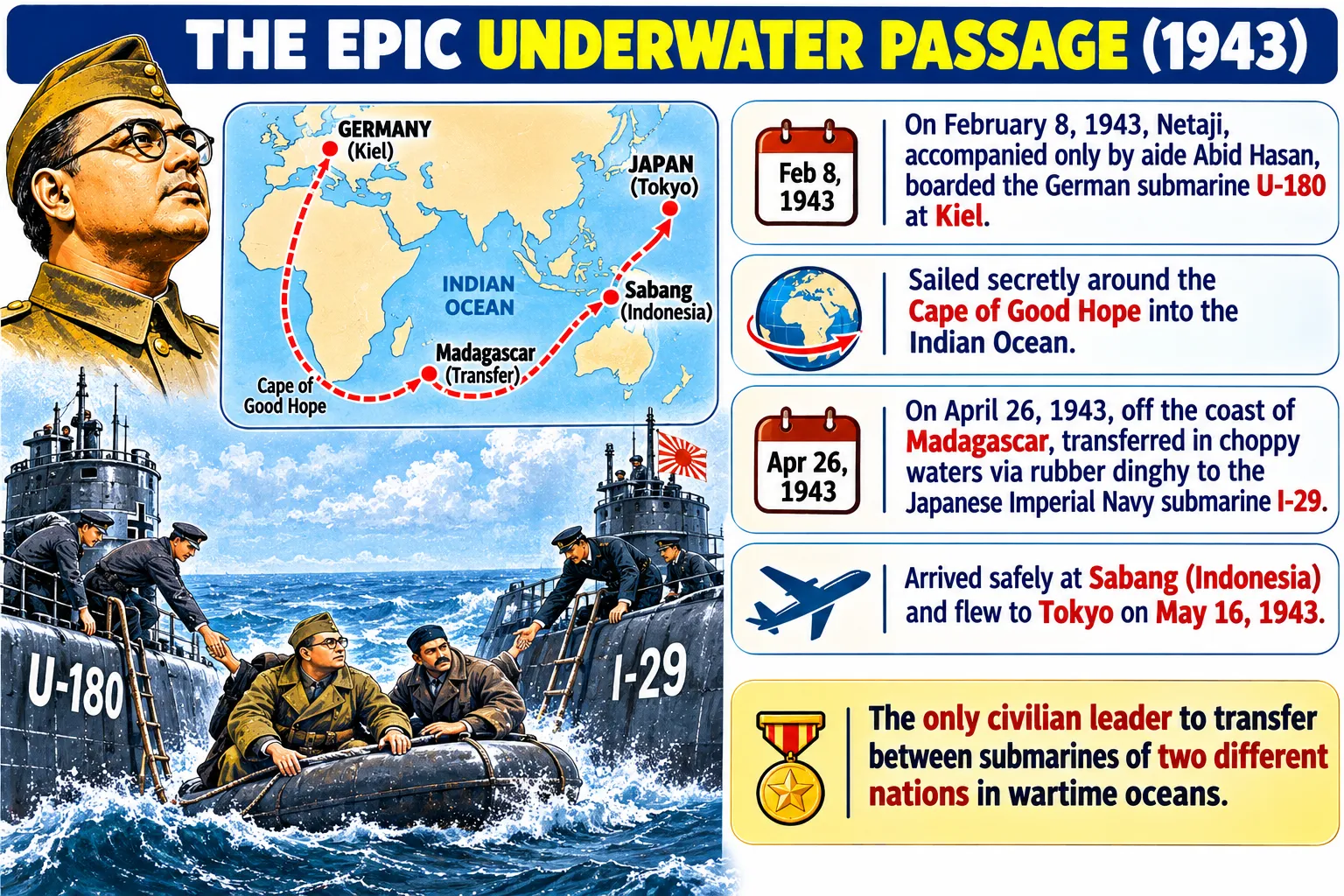 Figure 3: Netaji’s Historic Submarine Voyage from Germany to Japan
- On February 8, 1943, Netaji, accompanied only by aide Abid Hasan, boarded the German submarine U-180 at Kiel.
- Sailed secretly around the Cape of Good Hope into the Indian Ocean.
- On April 26, 1943, off the coast of Madagascar, transferred in choppy waters via rubber dinghy to the Japanese Imperial Navy submarine I-29.
- Arrived safely at Sabang (Indonesia) and flew to Tokyo on May 16, 1943.
- The only civilian leader to transfer between submarines of two different nations in wartime oceans.
3. The Indian National Army (Azad Hind Fauj): Genesis and Restructuring
The idea of liberating India by utilizing Indian soldiers serving in the British Indian Army in Southeast Asia predated Netaji’s arrival.
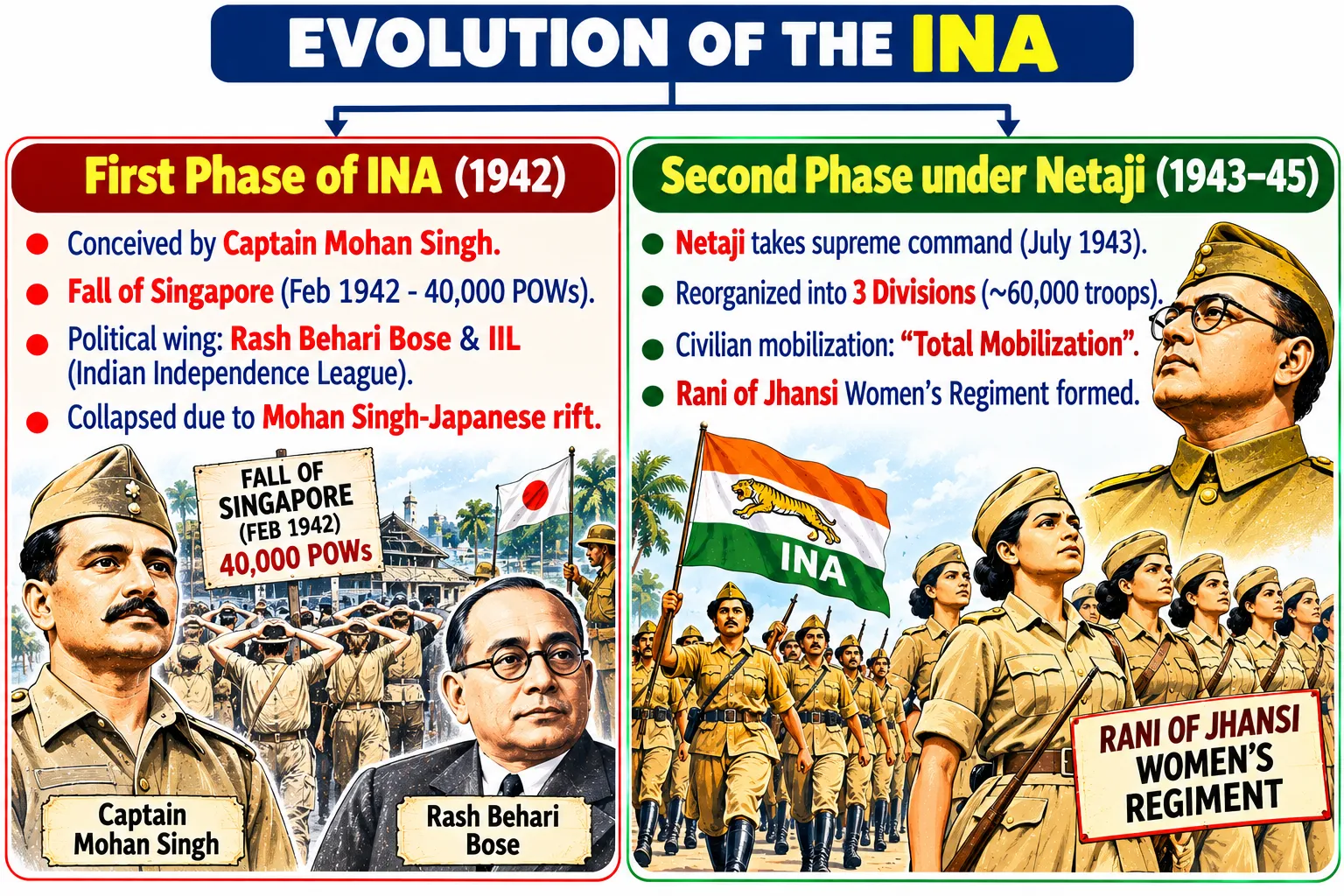 Figure 4: Organizational Evolution of the Indian National Army (1942–1945)
A. The First Phase of the INA: Captain Mohan Singh (1942 CE)
- The Visionary: Captain Mohan Singh, an officer of the 1/14th Punjab Regiment of the British Indian Army, retreated into the Malayan jungles following British defeats against Japan.
- The Japanese Liaison: Encouraged by Japanese intelligence officer Major Iwaichi Fujiwara and Sikh religious leader Giani Pritam Singh, Mohan Singh resolved to create an army composed of Indian soldiers to fight for India’s freedom.
- The Fall of Singapore (February 15, 1942): When British Lieutenant-General A.E. Percival surrendered the fortress of Singapore to Japanese General Tomoyuki Yamashita, over 45,000 Indian soldiers became prisoners of war. At a historic assembly at Farrer Park, Fujiwara handed over these POWs to Mohan Singh, who invited them to join the Indian National Army (INA). Over 40,000 soldiers volunteered.
- The Indian Independence League (IIL): Expatriate Indian revolutionary Rash Behari Bose (who had been living in political exile in Japan since the 1912 Hardinge bomb conspiracy) organized representative conferences at Tokyo (March 1942) and Bangkok (June 1942). The Bangkok Conference formally created the Indian Independence League (with Rash Behari Bose as President) and designated the INA as its military arm.
- Collapse of the First Phase: In late 1942, serious disputes arose between Captain Mohan Singh and Japanese military authorities over the size, autonomy, and strategic deployment of the army. When Mohan Singh refused to serve as a puppet, he was arrested and interned by the Japanese, plunging the INA into disarray.
B. The Arrival of Netaji and Reorganization (1943 CE)
Arriving in Tokyo in May 1943, Netaji held discussions with Japanese Prime Minister General Hideki Tojo, who made a formal declaration in the Japanese Diet (Parliament) supporting unconditional Indian independence.
- Transfer of Command (July 4, 1943): At a mass rally at the Cathay Building in Singapore, 70-year-old Rash Behari Bose formally handed over the leadership of the Indian Independence League and the supreme command of the INA to Subhas Chandra Bose.
- The Slogans of Liberation: On July 5, 1943, reviewing the soldiers of the Azad Hind Fauj, Netaji delivered his historic command: “Chalo Dilli!” (“On to Delhi!”) and proclaimed:
“Give me blood, and I will give you freedom!” (Tum mujhe khoon do, main tumhe azaadi doonga!)
- Structure of the Restructured INA: Reorganized into three divisions comprising nearly 60,000 troops (drawn from both POWs and Indian rubber plantation workers in Malaya, Burma, and Singapore):
- Gandhi Brigade
- Nehru Brigade
- Azad Brigade
- Subhas Brigade (Elite field shock unit commanded by Shah Nawaz Khan)
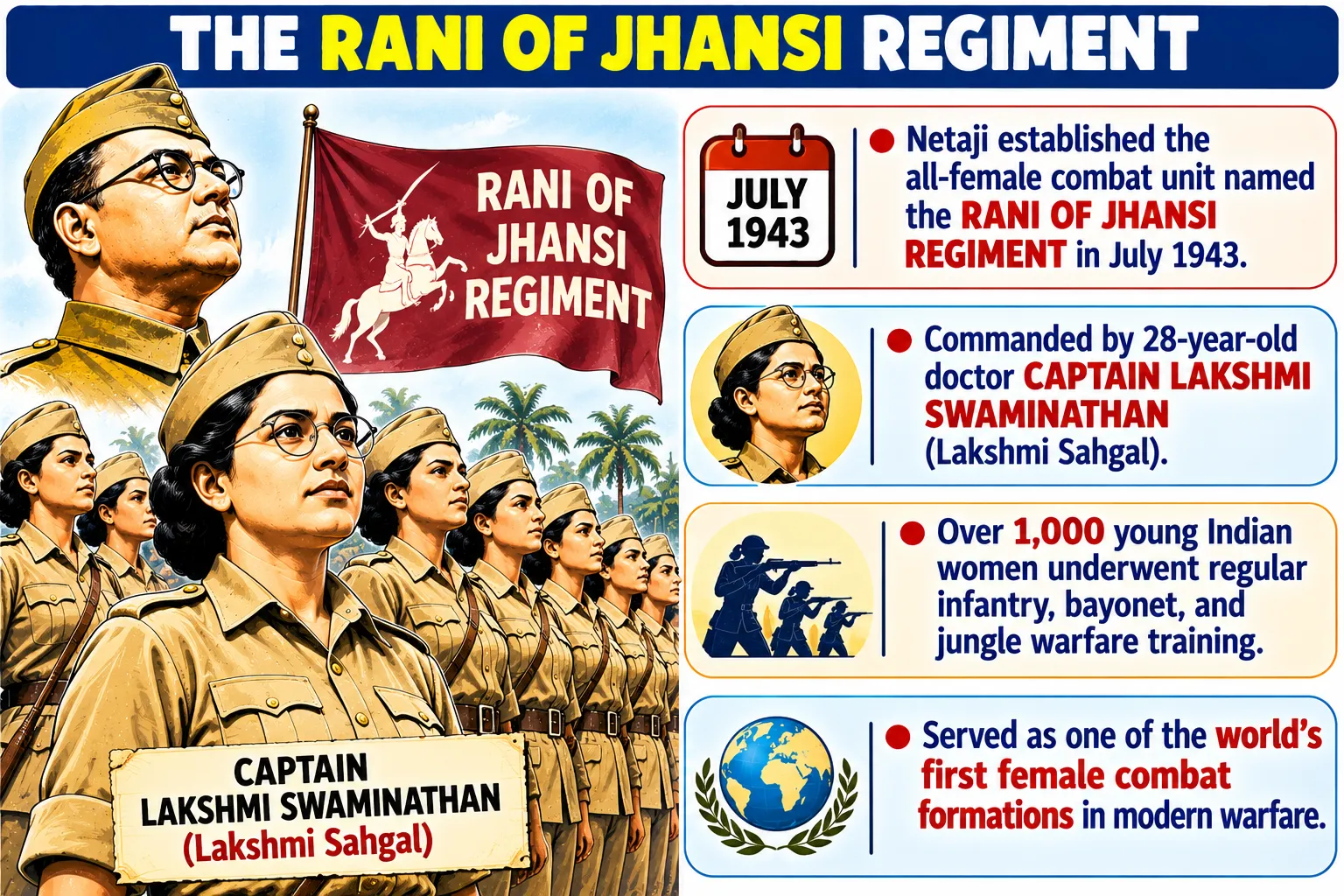 Figure 5: The All-Female Combat Formation Led by Captain Lakshmi Sahgal
- Netaji established the all-female combat unit named the RANI OF JHANSI REGIMENT in July 1943.
- Commanded by 28-year-old doctor CAPTAIN LAKSHMI SWAMINATHAN (Lakshmi Sahgal).
- Over 1,000 young Indian women underwent regular infantry, bayonet, and jungle warfare training, serving as one of the world’s first female combat formations in modern warfare.
4. The Provisional Government of Free India (Arzi Hukumat-e-Azad Hind)
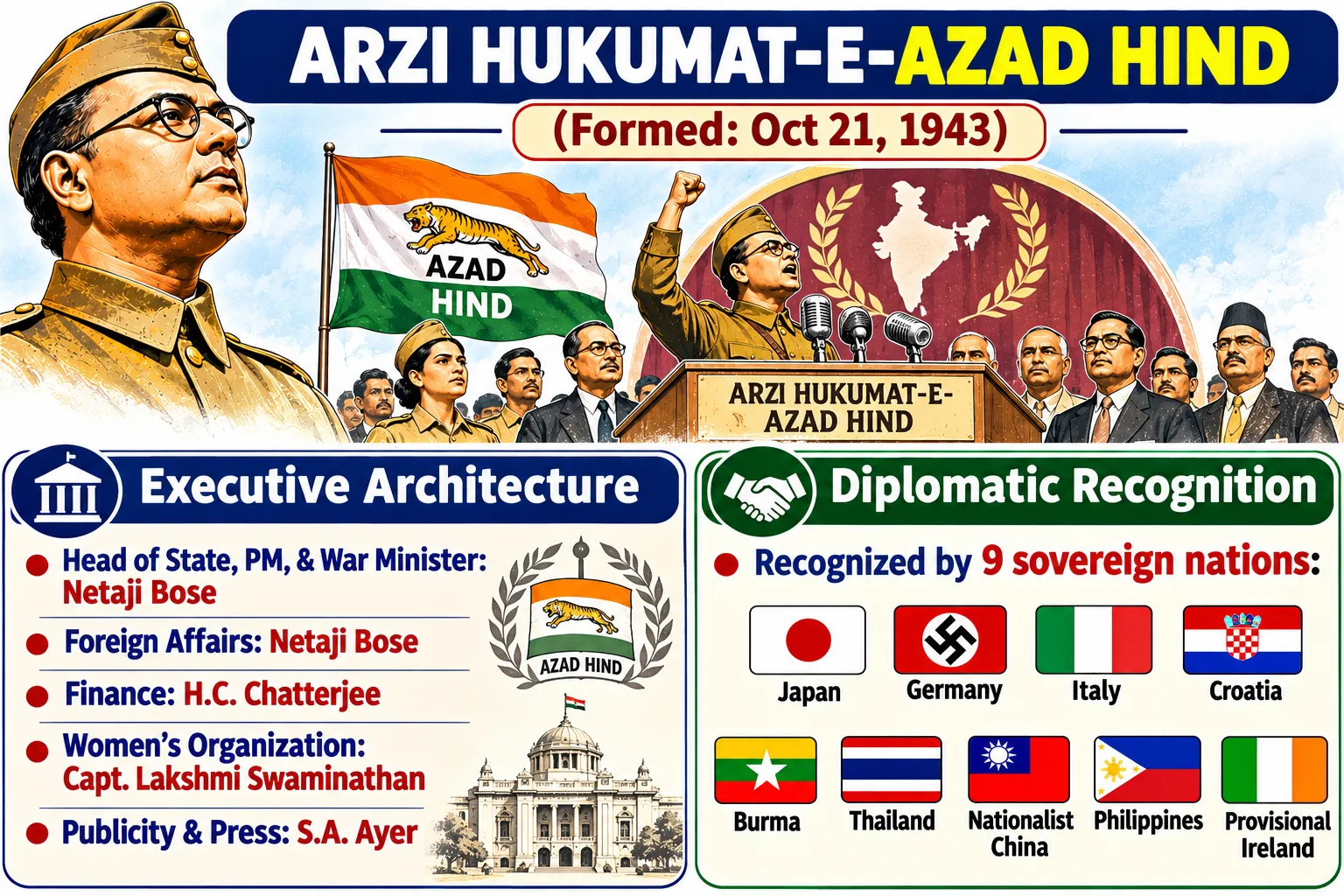 Figure 6: Executive Architecture and Global Diplomatic Recognition of Azad Hind
On October 21, 1943, at the Cathay Cinema Hall in Singapore, Netaji Subhas Chandra Bose proclaimed the establishment of the Provisional Government of Free India (Arzi Hukumat-e-Azad Hind):
- Executive Architecture:
- Head of State, PM, & War Minister: Netaji Subhas Chandra Bose
- Foreign Affairs: Netaji Subhas Chandra Bose
- Finance: H.C. Chatterjee
- Women’s Organization: Capt. Lakshmi Swaminathan
- Publicity & Press: S.A. Ayer
- Diplomatic Recognition: Recognized by 9 sovereign nations: Japan, Germany, Italy, Croatia, Burma, Thailand, Nationalist China, Philippines, and Provisional Ireland.
- Declaration of War: On October 23, 1943, the Provisional Government formally declared war on Britain and the United States.
- Territorial Possession (Andaman & Nicobar Islands):
- On November 6, 1943, Japanese Premier Tojo announced the transfer of the Andaman and Nicobar Islands to the Provisional Government.
- Netaji visited Port Blair on December 30, 1943, unfurling the Indian National Flag at the Gymkhana Ground.
- Re-christened the islands: Andaman became Shaheed Dweep (Martyr Island) and Nicobar became Swaraj Dweep (Self-Rule Island).
- Major-General A.D. Loganathan was appointed the first Indian Chief Commissioner of the islands.
- Azad Hind Bank: Established at Rangoon (1944) with currency notes printed for use in liberated zones.
5. The Military Campaign: Imphal, Kohima, and Defeat (1944 – 1945 CE)
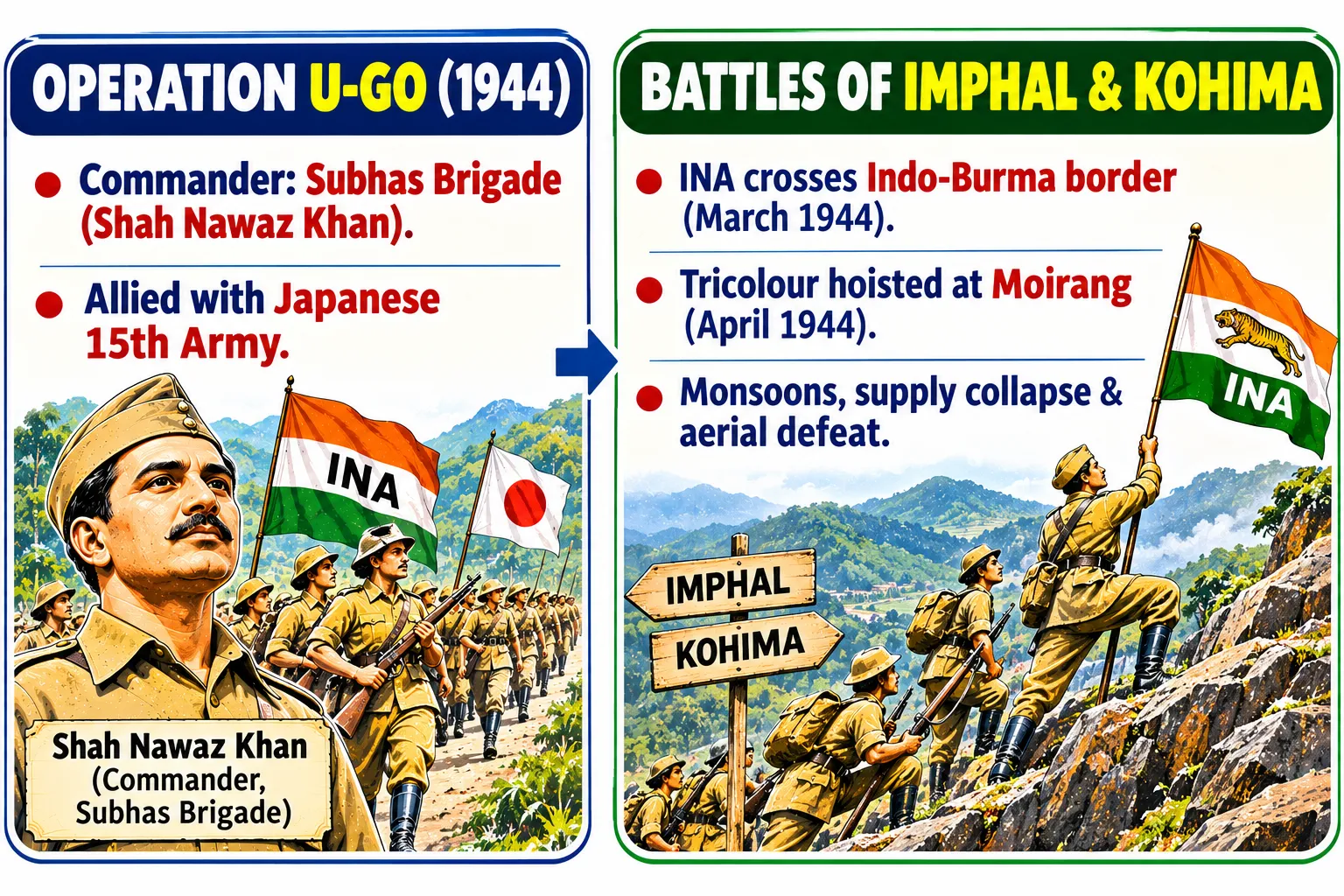 Figure 7: The Offensive Across the Indo-Burma Frontier and Strategic Reversal
In early 1944, the military headquarters of the INA was shifted to Rangoon (Burma) in preparation for the joint Indo-Japanese offensive into Northeast India, codenamed Operation U-Go:
- Crossing into Indian Soil: On March 18, 1944, the Subhas Brigade crossed the Indo-Burma frontier, advancing into Manipur and Nagaland.
- Hoisting the Flag at Moirang: On April 14, 1944, Colonel Shaukat Hayat Malik captured Moirang in Manipur and hoisted the tricolour of the Azad Hind Fauj, establishing the administrative base of the Provisional Government on Indian soil.
- The Siege of Kohima and Imphal: The INA and Japanese troops encircled the British-Indian garrison at Kohima and laid siege to Imphal for several weeks.
- Causes of Military Reversal:
- Monsoon Torrents: The premature arrival of the torrential monsoon turned jungle tracks into impassable swamps, stranding heavy artillery and ammunition supply lines.
- Total Starvation & Malaria: Cut off from supply dumps, INA soldiers were reduced to eating wild grass and tree bark, suffering epidemics of malaria and dysentery.
- Allied Air Supremacy: British General William Slim (Fourteenth Army) mounted a counter-offensive utilizing complete Allied air superiority to airlift reinforcements and supplies directly into Imphal.
- Japanese Strategic Retreat: Suffering severe reverses in the Pacific War (Battle of Leyte Gulf), the Japanese high command ordered a general retreat, abandoning the Burma frontier.
The Retreat and Mystery of Netaji’s Death
Out of 20,000 INA soldiers who participated in the campaign, nearly half perished from starvation, disease, and battle casualties. Netaji conducted a fighting retreat to Bangkok and Singapore.
Following the atomic bombings of Hiroshima and Nagasaki, Japan surrendered unconditionally on August 15, 1945. Flying from Singapore toward Tokyo to negotiate passage to the Soviet Union, Netaji’s overloaded Japanese military bomber (Mitsubishi Ki-21) crashed shortly after takeoff from Taihoku Airfield, Formosa (modern Taipei, Taiwan) on August 18, 1945. Netaji was reported to have suffered severe third-degree burns and died the same evening in a military hospital, though controversy, public skepticism, and official inquiry commissions (Shah Nawaz Committee, Khosla Commission, Mukherjee Commission) surrounded the incident for decades.
6. The Historic INA Red Fort Trials (1945 – 1946 CE)
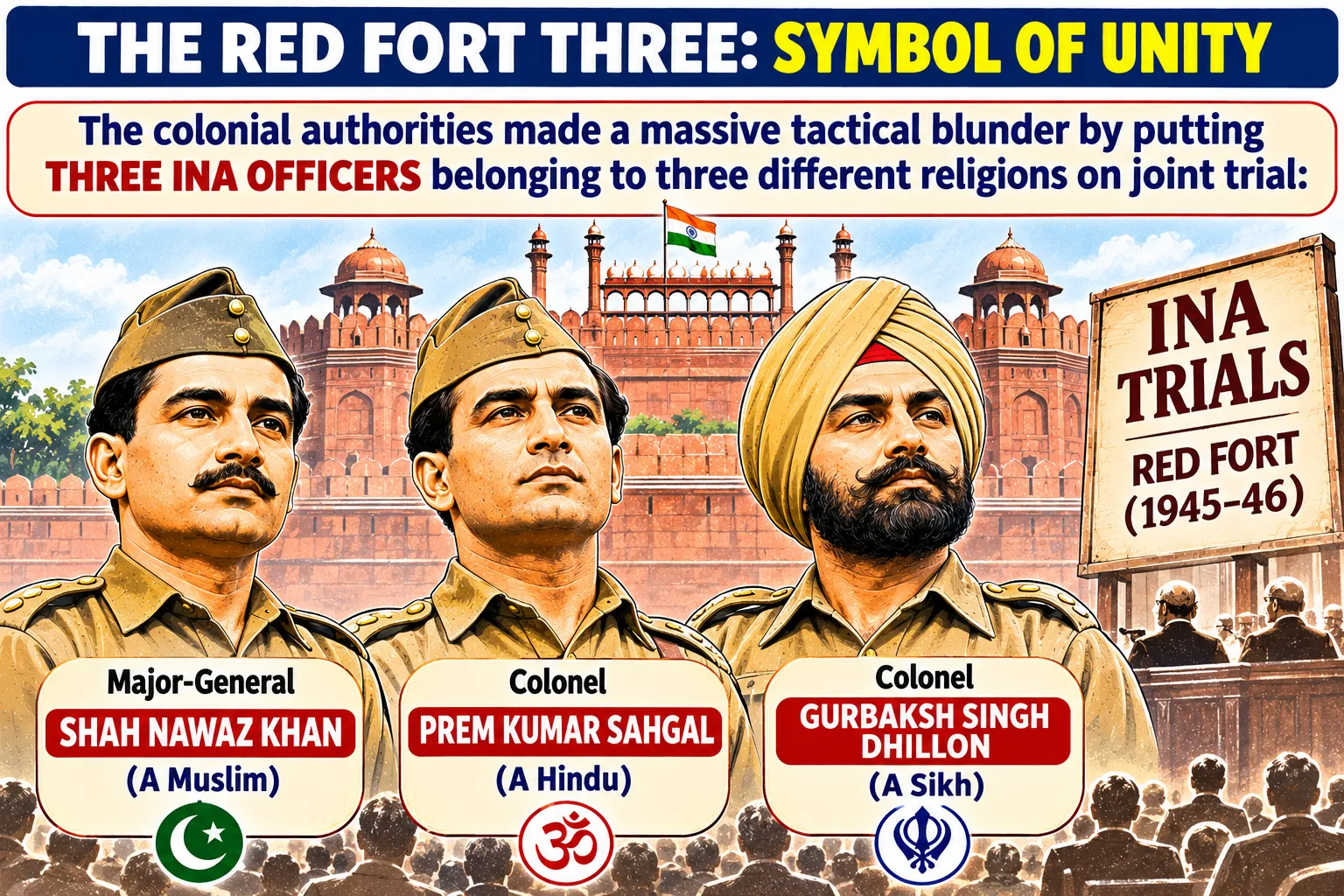 Figure 8: Shah Nawaz Khan, Prem Kumar Sahgal, and Gurbaksh Singh Dhillon
Following the surrender of Japan, over 20,000 INA officers and soldiers were captured by the British Army. The colonial government, determined to make an example of these “traitors,” decided to put prominent INA officers on public trial in the Red Fort in Delhi on charges of treason, murder, and waging war against the King-Emperor.
The colonial authorities made a massive tactical blunder by putting three INA officers belonging to three different religions on joint trial:
- Major-General SHAH NAWAZ KHAN (A Muslim)
- Colonel PREM KUMAR SAHGAL (A Hindu)
- Colonel GURBAKSH SINGH DHILLON (A Sikh)
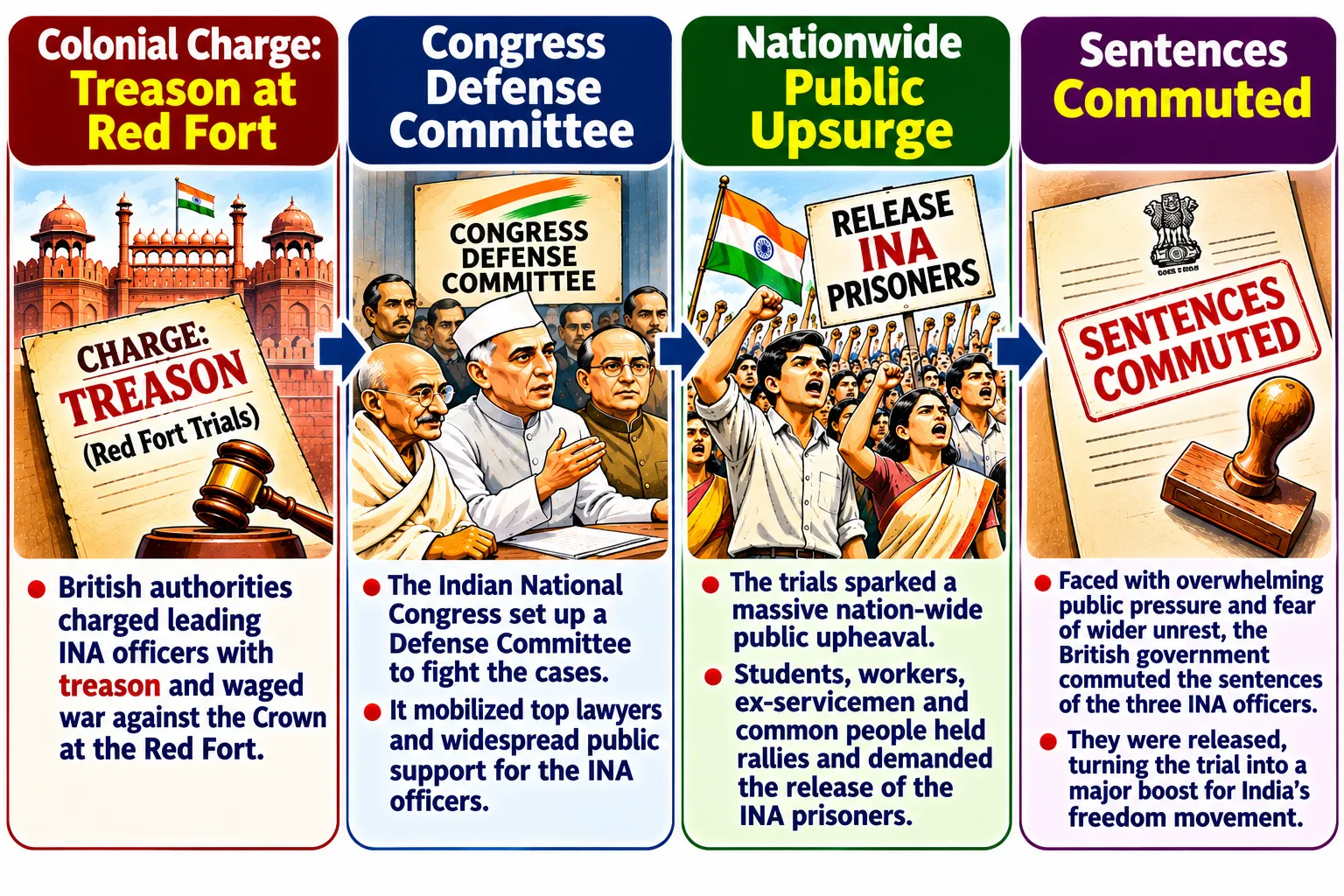 Figure 9: Sequence of the Red Fort Trials from Treason Charge to Remission
A. The Congress INA Defense Committee
The joint trial united the entire Indian nation. The Indian National Congress, which had historically advocated non-violence, recognized the patriotic motives of the INA soldiers and formed a stellar INA Defense Committee:
- Eminent Defense Lawyers: Headed by Bhulabhai Desai, assisted by Sir Tej Bahadur Sapru, Kailash Nath Katju, and Asaf Ali.
- Nehru Dons the Barrister’s Gown: Jawaharlal Nehru, who had abandoned his legal practice 25 years earlier, put on his barrister’s gown to join the defense team.
- The Legal Defense: Bhulabhai Desai delivered an argument based on international law, stating that the INA was the military wing of a recognized sovereign provisional government (Arzi Hukumat-e-Azad Hind) fighting a lawful war of liberation, and therefore its officers were entitled to the rights of legitimate belligerents under the Geneva Conventions rather than being treated as common mutineers.
B. The Popular Tempest: “Lal Qile Se Aayi Aawaz”
The trials triggered a storm of public defiance across India, with people chanting the popular street slogan:
“Lal Qile se aayi aawaz: Sahgal, Dhillon, Shahnawaz! Teenon ki ho umar daraz!”
(From the Red Fort comes the roar: Sahgal, Dhillon, Shahnawaz! May the three live long!)
- Mass Solidarity: INA Relief Funds were collected in every city, supported by political groups including the Congress, the Muslim League, the Communist Party, and the Sikh Akali Dal.
- Widespread Rioting: In November 1945 and February 1946, massive strikes and violent clashes with police paralyzed Calcutta, Bombay, and Delhi.
- The Verdict and Remission: In January 1946, the military tribunal found all three officers guilty of waging war against the King-Emperor and sentenced them to transportation for life. However, Commander-in-Chief General Claude Auchinleck, recognizing that executing the sentences would trigger an army mutiny, utilized his discretionary authority to suspend and remit the sentences, setting the officers free.
7. The Royal Indian Navy (RIN) Mutiny (February 1946)
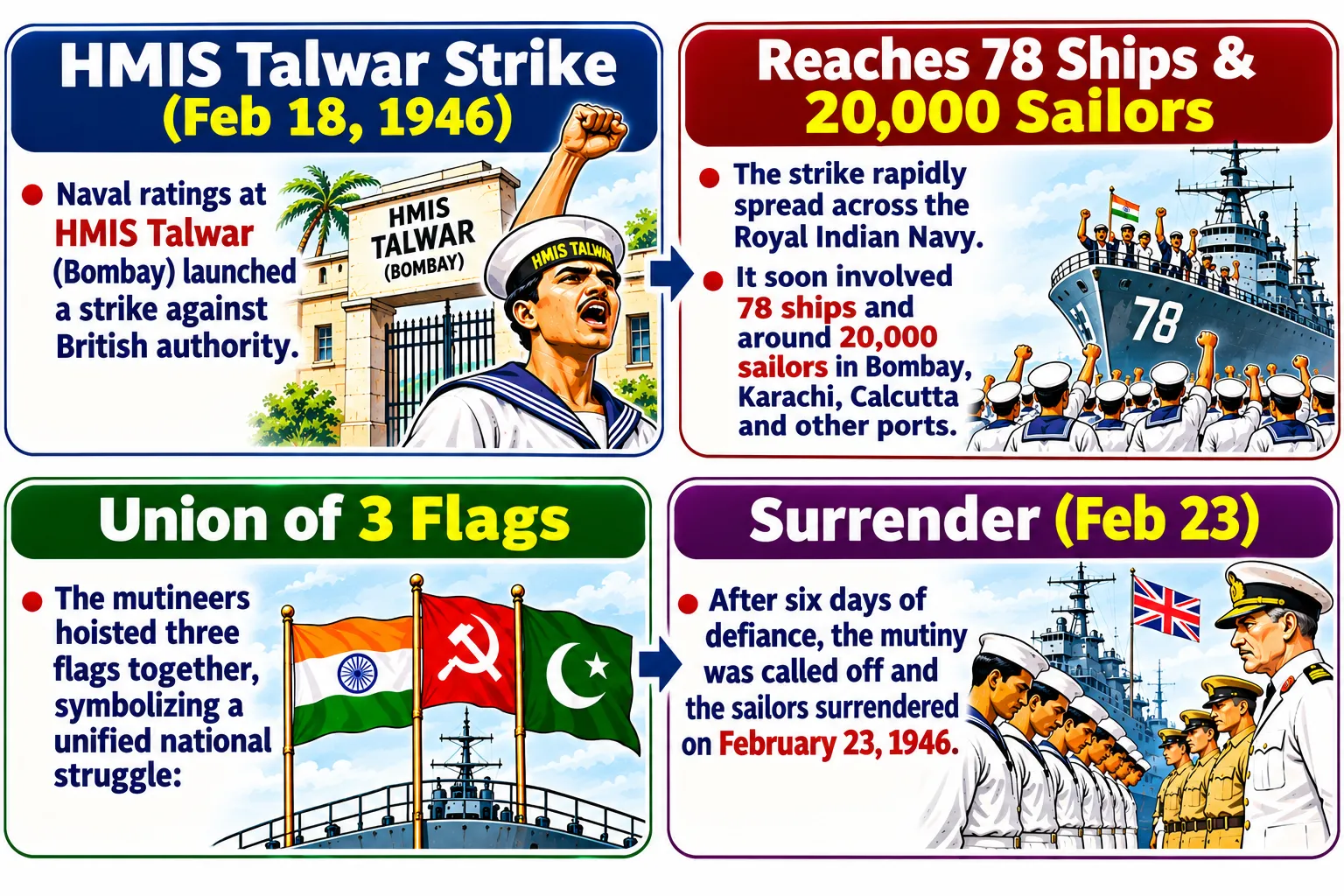 Figure 10: Spread and Climax of the Royal Indian Navy Revolt Across 78 Warships
The emotional fervor generated by the INA trials directly inspired the armed forces of British India to revolt. On February 18, 1946, ratings (sailors) of the signal school HMIS Talwar in Bombay went on a hunger strike protesting racial discrimination, unpalatable food, and the arrest of rating B.C. Dutt (who had painted “Quit India” on the ship’s hull):
- The Spread: The strike spread like wildfire to 78 warships, 20 shore establishments, and over 20,000 naval ratings across Bombay, Karachi, Madras, Calcutta, and Cochin.
- The Tricolour and Crescent: Ratings hoisted the Congress Tricolour, the Muslim League Green Crescent, and the Red Flag of the Communist Party together on the masts of the rebel warships, turning guns toward the city of Bombay.
- Naval Central Strike Committee: Led by M.S. Khan (President) and Madan Singh (Vice-President).
- Civilian Solidarity: In Bombay, workers and students observed a general strike, clashing with British troops; over 200 civilians were killed in police firings.
- The Surrender (February 23, 1946): Fearing that an undisciplined armed rebellion would lead to anarchy, Sardar Vallabhbhai Patel and Muhammad Ali Jinnah intervened, persuading the naval ratings to surrender with an assurance that their grievances would be defended. The strike committee declared: “Our revolt was an expression of the nation’s will… We surrender to India, not to Britain.”
8. Quick Examination Facts
| Topic / Milestone | Key Exam Fact |
|---|---|
| Year of Forward Bloc Foundation | May 1939 at Makur, Unnao (UP) by Subhas Chandra Bose |
| Date of Netaji’s Great Escape from Calcutta | January 16–17, 1941 (Disguised as Maulvi Ziauddin) |
| Italian Pseudonym Used by Bose in Kabul | Orlando Mazzotta |
| Origin of the Honorific Title ‘Netaji’ | Bestowed by Indian expatriates & soldiers in Berlin, Germany (1941) |
| Origin of the Slogan ‘Jai Hind’ | Coined by Zain-ul-Abideen Hassan (adopted by Netaji’s Free India Centre) |
| Original Conceiver of the INA (First Phase) | Captain Mohan Singh (1942, with Major Fujiwara) |
| President of Indian Independence League (1942) | Rash Behari Bose (Bangkok Conference) |
| Date Netaji Assumed Supreme Command of INA | July 4, 1943 at Cathay Building, Singapore |
| Famous War Cry of Netaji in Singapore | “Chalo Dilli!” and “Tum mujhe khoon do, main tumhe azaadi doonga” |
| Commander of Rani of Jhansi Regiment | Captain Lakshmi Swaminathan (Lakshmi Sahgal) |
| Date Provisional Government of Free India Proclaimed | October 21, 1943 at Singapore (Arzi Hukumat-e-Azad Hind) |
| Islands Renamed ‘Shaheed’ and ‘Swaraj’ | Andaman (Shaheed Dweep) and Nicobar (Swaraj Dweep) (Dec 1943) |
| Site where INA Hoisted Tricolour on Indian Soil | Moirang (Manipur) on April 14, 1944 by Col. Shaukat Malik |
| Reported Date of Netaji’s Death in Plane Crash | August 18, 1945 at Taihoku Airfield, Formosa (Taipei, Taiwan) |
| The Three Officers Tried at the Red Fort (1945) | Shah Nawaz Khan, Prem Kumar Sahgal, and Gurbaksh Singh Dhillon |
| Head of the Congress INA Defense Committee | Bhulabhai Desai (Assisted by Nehru, Sapru, Katju, Asaf Ali) |
| Commander-in-Chief Who Commuted INA Sentences | General Claude Auchinleck (January 1946) |
| Ship Where the 1946 Naval Mutiny Started | HMIS Talwar (Bombay, February 18, 1946) |
| President of Naval Central Strike Committee (1946) | M.S. Khan |
| Leader Who Negotiated the RIN Surrender | Sardar Vallabhbhai Patel (Surrendered February 23, 1946) |
9. Conclusion: The True Impact of Netaji and the INA
The military campaigns of the INA and their aftermath dealt a mortal blow to the British Raj. For nearly two centuries, British rule over 400 million Indians had rested on the absolute loyalty and reliability of the British Indian Army and Navy.
The INA trials and the 1946 Naval Mutiny completely broke that colonial pillar: the British realized that native soldiers, sailors, and airmen could no longer be trusted to shoot their fellow countrymen to sustain the Empire.
Decades later, when former British Prime Minister Clement Attlee visited India in 1956, he was asked by the acting Governor of West Bengal, Justice P.B. Chakrabarty, why Britain decided to leave India in 1947 despite the withdrawal of the Quit India movement. Attlee conceded that the decisive factor had been the activities of Netaji Subhas Chandra Bose and the resulting erosion of loyalty among the Indian armed forces.
Subhas Chandra Bose and Indian National Army (INA) (1939 – 1945 CE)
Practice Quiz • 15 MCQs